“Everyone thinks of changing the world, but no one thinks of changing himself.”
— Leo Tolstoy
After a year of much ballyhoo, we kick off the 2026 Study Spotlight with a reflective scorecard of the “Make America Healthy Again” (MAHA) movement. Let’s start by reviewing a timeline of their accomplishments in food and health. We’ll evaluate the Make America Healthy Again (MAHA) movement based on definitional clarity, execution, and its real-world impact on how people actually eat.
In Q1, the first quarter of 2025, Presidential Executive Order 14212 established the official Make America Healthy Again (MAHA) Commission, housed within the US Department of Health and Human Services (HHS), and chaired by HHS Secretary Robert F. Kennedy Jr. The MAHA mandate was to investigate drivers of chronic disease across food, chemicals, lifestyle, and medicine. We will focus on the food-related initiatives; so far, so good.
In Q2 2025, the commission released the “Make Our Children Healthy Again” Assessment. This was not a regulatory document; its purpose was to serve as a diagnostic framework, providing evidence linking childhood chronic disease to ultraprocessed foods (UPFs), environmental exposures, sedentary behavior, and pharmaceutical overuse. However, one major flaw of this document was that it did not formally define UPFs in either a scientifically rigorous or an operational sense. It specifically avoids the NOVA classification system, which is the current scientific literature standard for evaluating the health effects of ultraprocessed food consumption. In fact, the document, despite multiple references to ultraprocessed foods, fails to define what counts as an ultraprocessed food or offer any operational test that policymakers, healthcare providers, or consumers could apply to identify exactly what constitutes an ultraprocessed food. This becomes incredibly problematic for any realistic and meaningful policy implementation.
That definitional ambiguity carries forward into later initiatives.
In Q3 2025, HHS released a multi-agency strategy outlining over 100 executive actions and pilot programs across FDA food additive oversight, infant and early-life nutrition, chronic disease prevention, and research transparency. MAHA completed several key actions during this quarter.
In August 2025, the Department of Health and Human Services launched an interactive platform that tracks federal and state programs aligned with MAHA, including reforms to the food supply and public health initiatives. This is a reporting tool that catalogs transactions, such as those under a different, but still MAHA-aligned, approach to federal food assistance.
The U.S. Department of Agriculture-approved state SNAP waivers allow participating states to restrict the purchase of “unhealthy” or highly processed foods with SNAP benefits. Six states (Hawai‘i, Missouri, North Dakota, South Carolina, Virginia, and Tennessee) received waivers that amend the federal definition of “food for purchase” under SNAP, reduce taxpayer funding of foods that contribute to chronic disease, and promote healthier choices through program rules beginning in 2026. However, as noted above, without a clear diagnostic and operational definition of what constitutes ultraprocessed food, who decides what is “healthy” and what is not?
Under the current mechanism, there is no single national definition of “healthy food.” Congress sets broad eligibility rules, the USDA approves or denies waiver requests, and states propose their own definitions of which foods should be restricted or allowed, subject to federal review. MAHA does not define healthy foods, nor does its interactive platform classify products. As a result, “healthy” is determined through a patchwork of state-level decisions rather than a unified standard, leaving beneficiaries with restrictions but little guidance on what to eat.
This MAHA strategy catalyzed a hybrid federal–state approach to SNAP reform by legitimizing state-initiated waiver requests to restrict purchases of certain high-risk, ‘highly processed’ foods. While the USDA approved these waivers using existing SNAP authority, states became the de facto definers of “unhealthy” food through narrow, administratively feasible product categories. MAHA functioned as a policy and narrative catalyst rather than an implementation engine, with state commissions and local initiatives examining food systems and chronic disease but offering limited execution support. The result is a system that restricts purchases but provides inconsistent culinary guidance. This creates a gap between policy intent and lived behavior. The success of this initiative will be in the tasting of the pudding, if you’re allowed to buy it.
By contrast, MAHA ELEVATE represents a different kind of intervention. MAHA ELEVATE is a separate initiative that uses a prevention-oriented demonstration model within the Centers for Medicare & Medicaid Services innovation ecosystem, administered by the Center for Medicare & Medicaid Innovation. Using roughly $100 million in cooperative agreements, it funds provider organizations to test non-procedural, upstream care models in Original Medicare. The core aim is to see whether structured prevention, particularly lifestyle and nutrition-related interventions, can slow the progression of chronic disease, improve outcomes, and reduce downstream costs within real clinical workflows.
While not a food policy program per se, MAHA ELEVATE explicitly supports lifestyle-based care, including diet and physical activity, prevention of nutrition-related chronic diseases (e.g., diabetes and cardiovascular disease), and evidence-based dietary guidance embedded in team-based clinical care. Importantly, nutrition is treated as a clinical lever, not mere education: funded models are expected to be measurable, documented, and integrated into routine care. This represents a meaningful shift for Medicare, which has historically reimbursed treatment rather than prevention.
The model’s limitation is execution. MAHA ELEVATE funds clinical intention: protocols, teams, and outcomes, but does not specify how patients translate guidance into daily practice (e.g., skills, substitutions, culture, habit formation). In short, MAHA ELEVATE opens the door for prevention in Medicare, which is a great accomplishment. However, MAHA ELEVATE lacks a unified, food and lifestyle-specific framework for consistently documenting, comparing, and interpreting results across sites. As a result, costs and clinical outcomes may be measured, while the actual mechanisms of dietary and behavioral change remain poorly captured.
One of the most visible MAHA actions targets ingredients rather than behavior. The phasing out of petroleum-based synthetic food dyes is one of the most concrete and visible initiatives associated with the MAHA agenda. In coordination with the Food and Drug Administration and the U.S. Department of Health and Human Services, federal leadership signaled an intent to reduce and ultimately eliminate widely used artificial color additives such as Red Dye No. 40, Yellow No. 5, and Yellow No. 6 from the U.S. food supply. This approach relies primarily on voluntary industry commitments, with the possibility of future regulatory action, and has encouraged major food manufacturers to transition to naturally derived colorants by the end of 2026.
This initiative is notable for several reasons. First, it targets specific, identifiable ingredients rather than broad dietary patterns, making it administratively and politically feasible. Second, it has achieved visible industry participation, with large manufacturers publicly committing to reformulation. Third, it reflects a broader shift in regulatory tone: food additives once treated as benign aesthetic components are now being reconsidered in light of emerging evidence on neurobehavioral effects, particularly in children. As such, the dye phase-out functions as both a symbolic and practical signal that the federal government is willing to intervene upstream in the food system. This is good.
However, the scope of this action is narrow, and its public-health impact should not be overstated. The dye initiative does not address many well-documented biological disruptors commonly found in ultraprocessed foods. Additives such as carboxymethylcellulose (CMC) and polysorbate-80, both implicated in gut barrier disruption, microbiome alteration, and inflammatory signaling in animal and human studies, remain fully permitted. Likewise, other colorants and additives with unresolved or emerging concerns, including Blue 1, Blue 2, titanium dioxide (which is still permitted in some contexts), artificial sweeteners, emulsifiers, and texture modifiers, are unaffected by the current policy direction.
In summary, the synthetic dye phase-out represents a high-visibility, ingredient-specific success within the MAHA framework, demonstrating that reformulation is possible when regulatory pressure and public scrutiny align. At the same time, it highlights a key limitation of current food policy: removing a subset of conspicuous additives does not meaningfully resolve the deeper biological disruptions associated with ultraprocessed foods. This is a good, first, politically tractable step, but it is not a comprehensive strategy for addressing food-related chronic disease.
Less visible, but arguably more consequential, is the GRAS reform effort. Along similar lines, the GRAS (Generally Recognized As Safe) standard overhaul represents a quieter but very important MAHA-aligned action. The Food and Drug Administration signaled intent to tighten long-standing loopholes that allowed companies to self-affirm the safety of new food additives without notifying the agency or the public. Under the existing system, manufacturers can introduce novel chemicals into the food supply based on internal or selectively shared evidence, often with minimal transparency.
The proposed reforms aim to increase disclosure, oversight, and scientific accountability, reducing the likelihood that untested or weakly tested substances enter widespread use before independent evaluation. While not an outright ban on additives, the shift reasserts the FDA’s gatekeeping role and acknowledges growing concern that cumulative, low-dose exposures, particularly from ultraprocessed foods, have outpaced regulatory scrutiny.
In practical terms, this is a process correction rather than a sweeping food reform. It does not automatically remove existing GRAS substances, nor does it resolve debates over long-approved additives. However, it addresses a core structural weakness in U.S. food regulation by making the introduction of new chemicals more visible, contestable, and scientifically legible, laying the groundwork for more meaningful food-health oversight over time.
In September 2025, the Make Our Children Healthy Again Strategy was released. It was a sweeping, 120-page-plus initiative outlining executive actions to improve child health, realign incentives, increase research, and coordinate public-private partnerships toward MAHA goals. In the Make Our Children Healthy Again Strategy, food-specific initiatives are focused primarily on additive oversight, early-life exposure, and research coordination rather than on direct reform of eating patterns or food environments. The Strategy emphasizes tightening the GRAS process (see above), reducing synthetic food dyes (see above), improving surveillance of food chemicals, and expanding research on ultraprocessed foods and childhood chronic disease.
While it signals intent to align federal nutrition programs and encourage voluntary industry reformulation, it does not define healthy food, mandate changes to SNAP or school meals, or address culinary practice. It is a good start, but this strategy treats food largely as a chemical exposure and research problem, offering few concrete, enforceable interventions that change how children actually eat. As a result, it lacks clear definitions, implementation pathways, and measurement frameworks, leaving a significant gap between policy intent and lived behavior that limits its practical public health impact.
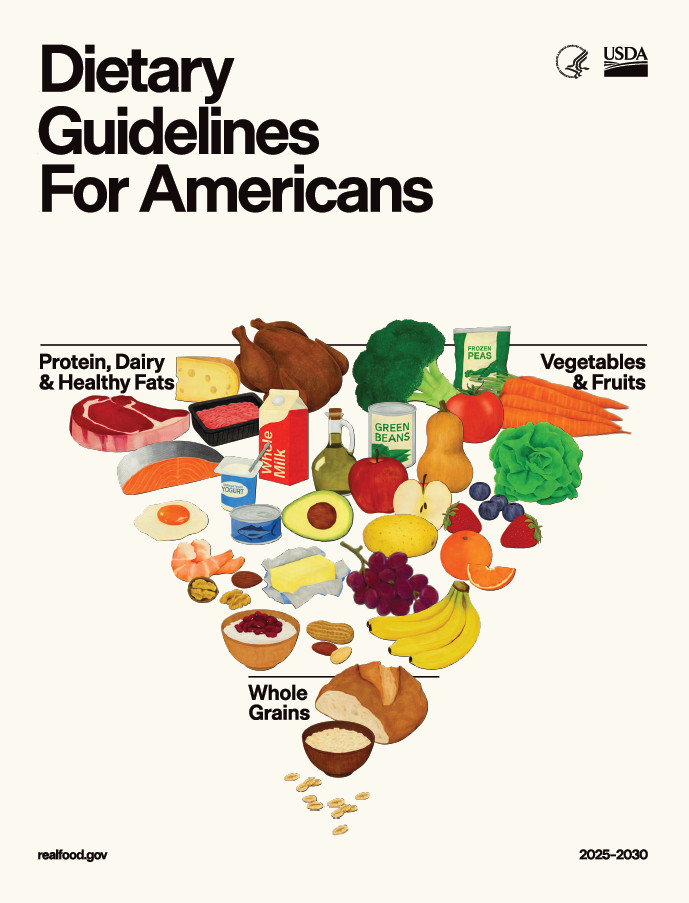
Finally, regarding big-ticket items, the New Dietary Guidelines for Americans 2025–2030 were released. Under the joint leadership of the U.S. Department of Health and Human Services and the U.S. Department of Agriculture, U.S. nutrition guidance was substantively revised in early 2026, marking one of the most meaningful shifts in federal dietary policy in decades. The updated guidelines move away from a narrow nutrient-centric framing and instead emphasize whole, minimally processed foods, explicitly advising against heavy reliance on packaged and ‘highly processed’ products, even when those products are fortified or technically “nutrient adequate.”
The guidance now clearly recommends limiting added sugars, refined carbohydrates, and ‘highly processed’ foods, while encouraging everyday consumption of high-quality protein, healthy fats, fruits, vegetables, and whole grains. Notably, it introduces a quantitative cap of no more than 10 grams of added sugar per meal, providing more concrete guardrails than prior daily percentage targets. Together, these changes reset the federal baseline for nutrition policy and influence what federal feeding programs, procurement standards, and institutional food environments are expected to promote.
These updates represent a significant home run. They validate our long-standing Culinary Medicine critiques of reductionist Nutritionism, acknowledge the distinct harms of ultraprocessed foods (even if they still don’t define them, at least they mention them), and align policy with real-world eating patterns rather than abstract nutrient math. This gives clinicians, educators, and care models a stronger federal foundation for recommending food quality rather than just nutrient compliance.
However, the misses are equally important. The guidelines still function primarily as advice, not as an execution framework. They do not address how people operationalize “minimally processed” eating in daily life, nor do they provide guidance on cooking skills, cultural adaptation, time constraints, or substitution strategies when “highly processed” foods are discouraged. The per-meal sugar limit, while clearer, risks becoming another compliance metric without tools to translate it into lived practice.
The new federal nutrition guidelines are trying to correct a long-standing mistake. For decades, Americans were told to focus on nutrients, counting fat grams, calories, or percentages, rather than on the actual foods they were eating. The updated guidance finally acknowledges that how food is made and eaten matters, encouraging whole, minimally processed foods and placing clearer limits on added sugars and highly processed products. This is an important step forward.
But there’s a catch. The guidelines tell people what to aim for, not how to get there. Most Americans don’t live in a world where cooking from scratch is easy, intuitive, or supported. When advice changes without practical tools, people naturally look for shortcuts. That’s how we end up trading one workaround for another: moving away from plant-based meat substitutes, for example, only to replace meals with protein powders stirred into our morning coffee. The guidance improves, but daily eating doesn’t automatically follow.
Viewed together, MAHA and its associated initiatives, such as the dietary guideline revisions, SNAP waivers, food dye phase-outs, GRAS reform, and MAHA ELEVATE, represent a meaningful shift in how government talks about food, chronic disease, and responsibility. MAHA succeeds at diagnosis, agenda-setting, and disruption, challenging the neutrality of ultraprocessed foods and exposing structural drivers of poor health.
Where it consistently falls short is execution: defining healthy food operationally, translating policy into daily behavior, and measuring what actually changes at the level of meals and lived experience. From our perspective, MAHA sets the necessary conditions for reform, but Culinary Medicine provides the operating system: the human-scale, skill-based, culturally grounded infrastructure that turns policy signals into sustainable health.
In sum, the revised guidelines successfully shift the what of federal nutrition policy away from nutrient arithmetic and toward food quality, processing, and context, and towards a direction broadly aligned with MAHA’s critique of the modern food environment. However, MAHA remains notably thin on the how. By emphasizing minimally processed foods, limiting added sugars per meal, and prioritizing protein and healthy fats, the guidelines send a stronger, more coherent signal than previous iterations, but they still fall short of providing a human-scale execution pathway. In the absence of culinary skill, time, cultural adaptation, and guidance on substitution, this gap predictably invites market-driven shortcuts such as protein powders, functional beverages, and reformulated convenience products, rather than durable changes in eating behavior.
This is where Culinary Medicine comes in. Real change doesn’t happen because people read better rules; it happens when they learn how to shop, cook, substitute, and eat in ways that fit their lives. Without that bridge, even good guidelines risk becoming just another set of ideals people can’t realistically apply in everyday life.
Final Score: 6 out of 10.
Positives:
- Agenda-setting & diagnosis,
- Visible, politically tractable actions
- Institutional signaling
Negatives:
- Definitional failure
- Execution gap
- Measurement weaknesses
- Narrow scope of “wins.”
Year one reflects a strong reframing and several concrete policy signals, but still lacks the definitional clarity, execution infrastructure, and measurement needed to meaningfully change how Americans actually eat.