The Bronx Sustainable Hydroponic Community Farm Network
A Program of the Center for Food As Medicine and Longevity
Executive Summary
Food insecurity affects millions globally, creating barriers that extend far beyond hunger to impact education, health, and community cohesion. In densely populated urban areas worldwide, traditional approaches—scattered gardens, isolated food pantries, temporary relief programs—provide important but limited solutions. What if instead of charity-based interventions, communities could control their own food production at scale?
The Revolutionary Solution: Hydroponic farming networks using a saturation model offer unprecedented potential to transform urban food systems in densely populated areas. Rather than isolated projects, the saturation approach establishes interconnected food production sites across every participating institution within a concentrated area. When schools, houses of worship, community organizations, and public institutions all operate hydroponic farms simultaneously, the entire community’s food infrastructure transforms.
Hydroponic systems produce 30-50% more food per square foot than traditional agriculture while using 90% less water. They operate year-round, independent of weather and soil conditions, making fresh produce accessible in urban environments where traditional farming is impossible. Most importantly, when deployed at saturation scale across institutional networks in densely populated areas, they create community-controlled food sovereignty rather than dependency on external food assistance.
Here is everything you need to know about Food for Change:
| The Saturation Model | 40-50 farms concentrated within 1 to 2 miles of each other, the same streets, same blocks, same neighborhood. Not spread across a borough. One tight geography, fully saturated with fresh food production. |
| Why It Works | One farm feeds one space. 40-50 farms in the same small area change a community. When fresh food is available everywhere families already go, food insecurity ends at the neighborhood level, not just for a few families, but for everyone. |
| Community and Social Capital | When students, seniors, congregation members, and neighbors are all connected to farms on the same streets, they connect to each other. Harvests are shared. Elders pass recipes to young people. Food becomes the reason people who might never meet come together, building the trust and relationships that hold a neighborhood together. |
| Active Sites | Wings Academy • M.S. 129 • The Metropolitan Soundview High School • The Cinema School • NYPD Community Center (1932 Arthur Ave, 1,500 sq ft — opening soon) • All Souls Evangelical Church (1701 Vyse Ave, Bronx) |
| Monthly Production | 400-500 lbs of fresh produce per site: leafy greens, cilantro, peppers, herbs, tomatoes, and culturally familiar crops chosen by the community |
| At Full Scale | 40-50 sites producing hundreds of thousands of pounds per year, reaching tens of thousands of South Bronx families annually |
| Who Manages the Farm | CFAM’s professional team handles installation, seeding, nutrients, maintenance, and harvesting. Schools and partners fund nothing and help manage the farm. Community participation is always welcome; and required. |
| Cost to Partners | Zero. All equipment, installation, seeds, nutrients, and professional farm management are fully covered by CFAM. |
| Funding to Date | NYPD Foundation: $100,000 • Deutsche Bank Americas Foundation: $75,000 • Founder contribution: $100,000 • Additional individual donors |
| Growth Timeline | Now: 7 active sites • Year 1: 10-12 sites • Year 2: 25-30 sites • At Scale: 40-50 sites |
The saturation model works because it creates its own sustainability. When every institution has a farm, maintenance becomes routine. When every sector participates, community support solidifies. When entire neighborhoods benefit, local investment ensures continuation. Research confirms that agricultural projects reaching saturation scale have significantly higher sustainability rates and stronger community participation than isolated initiatives.
Applied in the South Bronx: Food for Change demonstrates this revolutionary approach in action in one of New York City’s most densely populated areas. As the first agricultural initiative where food production is primary and education is secondary, it operates in neighborhoods where 54% rely on SNAP benefits—NYC’s highest rate—and residents face 22% diabetes rates, 35% obesity, and median household income of just $32,381.
Forty interconnected hydroponic farms across schools, houses of worship, and police precincts establish community-controlled food production within walking distance of every resident. Students develop leadership skills while producing food for their families and neighbors. Congregations determine crops based on cultural preferences while members teach traditional cooking methods. Police officers work alongside community members, transforming relationships through shared agricultural work.
Food is the foundation of society and a universal language. When deployed through the saturation model, hydroponic farming creates third places—safe spaces where people who might never otherwise meet can gather side-by-side with shared purpose. It transforms charity into dignity, dependency into sovereignty, and strangers into neighbors.
This is not charity. This is community empowerment.
This is not about giving people food. This is about growing it together.
This is not a program. This is a movement.

Current Status: Proven Success, Scaling to Transform Communities
Operational Sites:
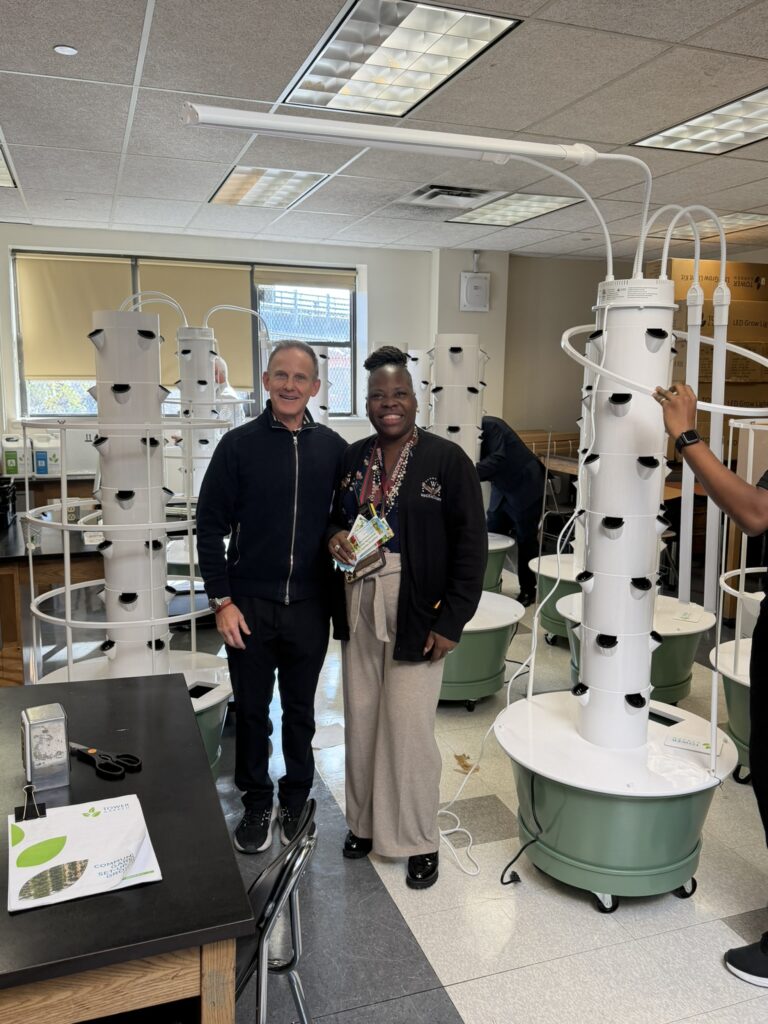
M.S. 129 Academy (2055 Mapes Ave, Bronx, NY 10460) – Producing 400+ pounds monthly with 20 student leaders
Wings Academy (1122 E 180th St, Bronx, NY 10460) – Operational hydroponic farm serving students and families
Metro Soundview High School (1300 Boynton Ave, Bronx, NY 10472)
The Vision: 50 Sites in 2 Years
Food for Change is implementing the nation’s first saturation model for urban food security—transforming an entire community’s food infrastructure through 40 interconnected hydroponic farms across schools, houses of worship, and police precincts within this concentrated one-square-mile South Bronx area.
Food Production First: A Revolutionary Departure
Food for Change represents the first agricultural initiative of its kind—where food production is the primary goal and education is a valuable secondary benefit. This fundamentally differs from traditional school garden projects:
Traditional Educational Gardens:
• Primary goal: Teaching students about agriculture and nutrition
• Secondary benefit: Small amounts of food production for educational purposes
• Success measured by: Lesson plans completed, curriculum standards met
• Scale: Small plots producing minimal food quantities
Food for Change Production Model:
• Primary goal: Producing substantial food quantities for community food security
• Secondary benefit: Students develop leadership skills through meaningful work that feeds families
• Success measured by: Pounds of food produced, families fed, community food security achieved
• Scale: 400+ pounds monthly per school, 16,000+ pounds monthly at full saturation
Students learn by doing real work that matters—managing hydroponic systems that produce food their families and neighbors depend on. Educational benefits emerge naturally from this meaningful production, not from artificial curriculum overlays. The measure of success is not test scores or lesson completion, but pounds harvested and neighbors fed.
The Saturation Approach
At its core, Food for Change is a direct response to increasing rates of food insecurity through the creation of a resilient, hyperlocal food ecosystem. This initiative introduces the first-ever saturation model—ensuring that every participating school, house of worship, and police precinct operates a hydroponic farm. This isn’t about scattered gardens or symbolic gestures. This is about transforming an entire community’s food infrastructure so that no institution or individual is left behind.
This revolutionary approach addresses not only food insecurity but creates comprehensive community transformation:
• Reduces crime by creating positive engagement opportunities between police and community members through shared agricultural work
• Increases student attention and academic performance when families have reliable access to nutritious food and students develop leadership skills through meaningful work
• Improves educational outcomes as food security directly correlates with student concentration, attendance, and cognitive development
• Strengthens family stability by reducing household food expenses by $40-120 monthly while providing fresh, culturally-relevant produce
Research confirms that multi-site, networked hydroponic systems dramatically improve food security, with saturation approaches showing 3 times greater community participation and significantly stronger social capital than isolated projects.
How Saturation Transforms Communities
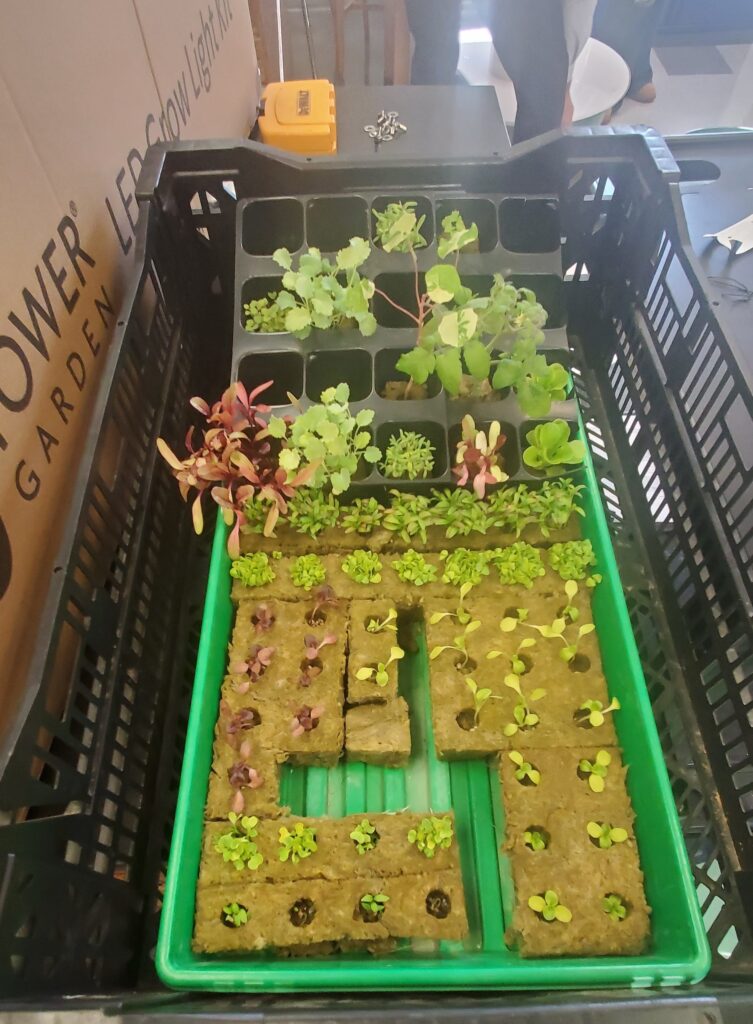
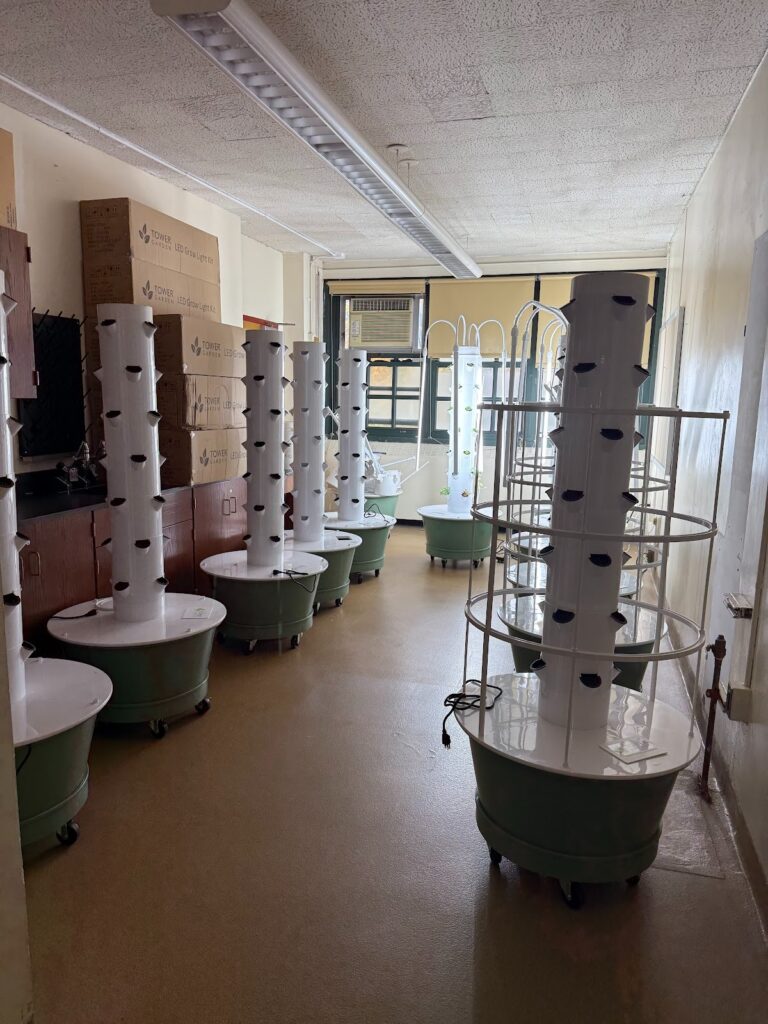
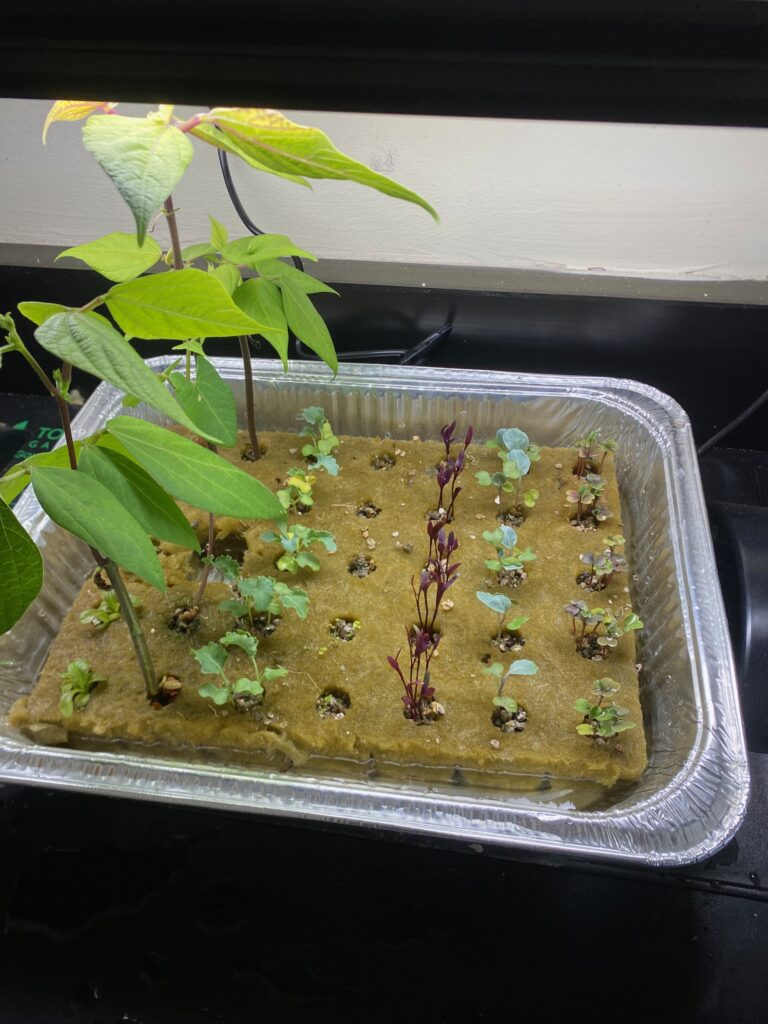
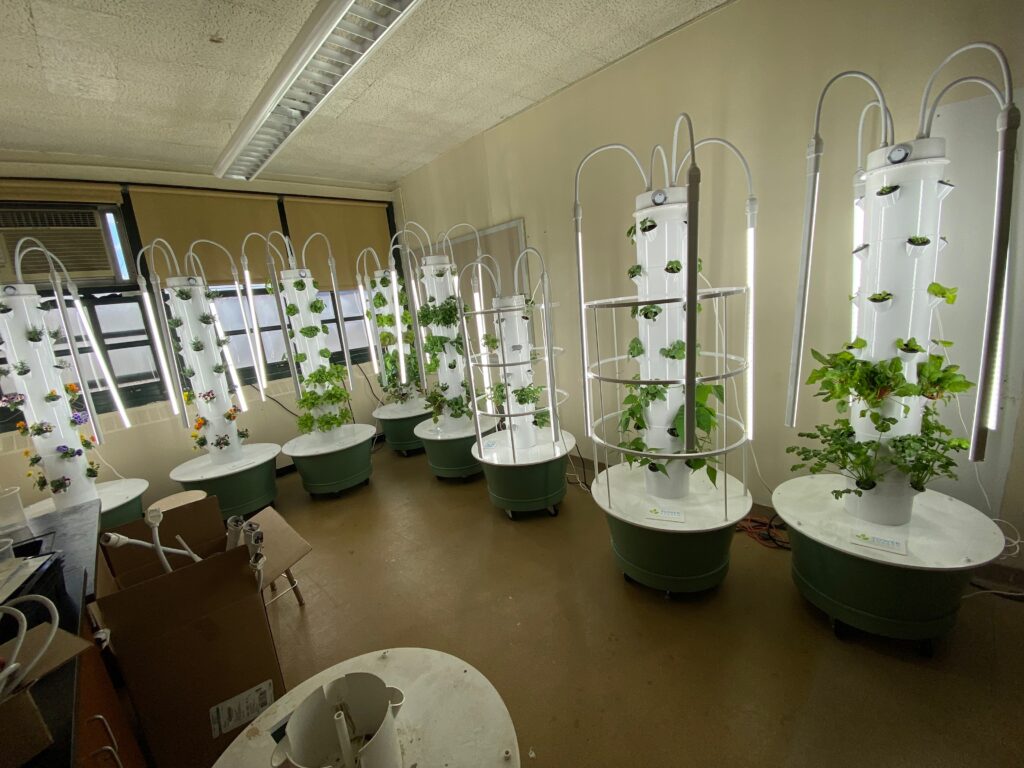
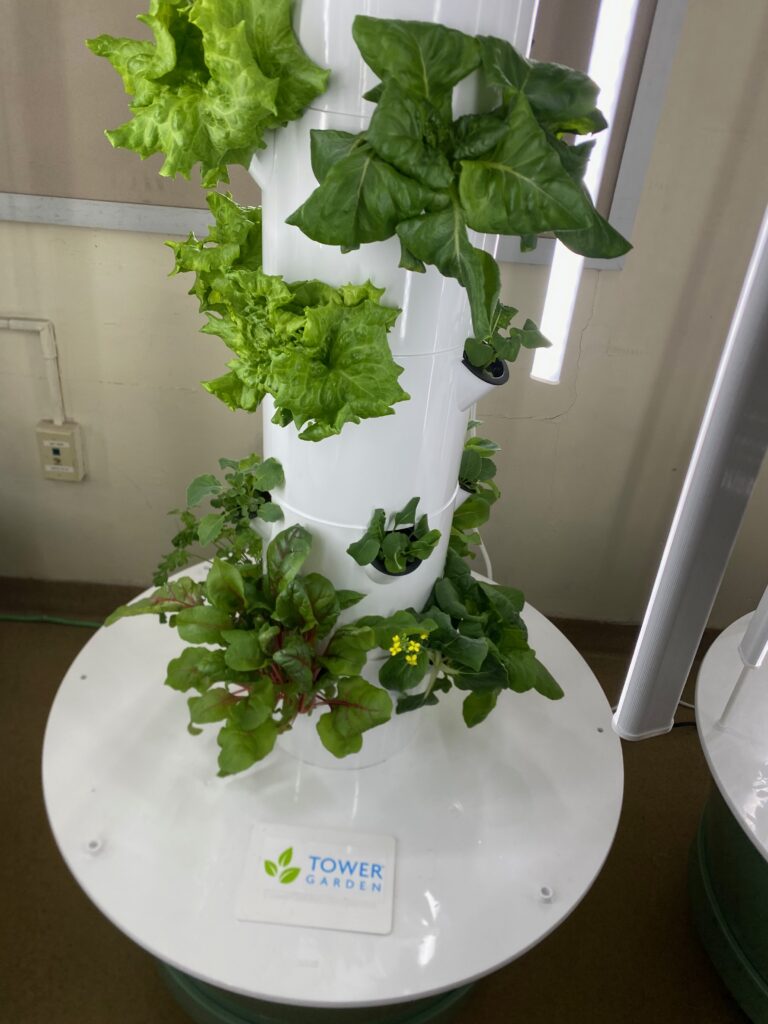
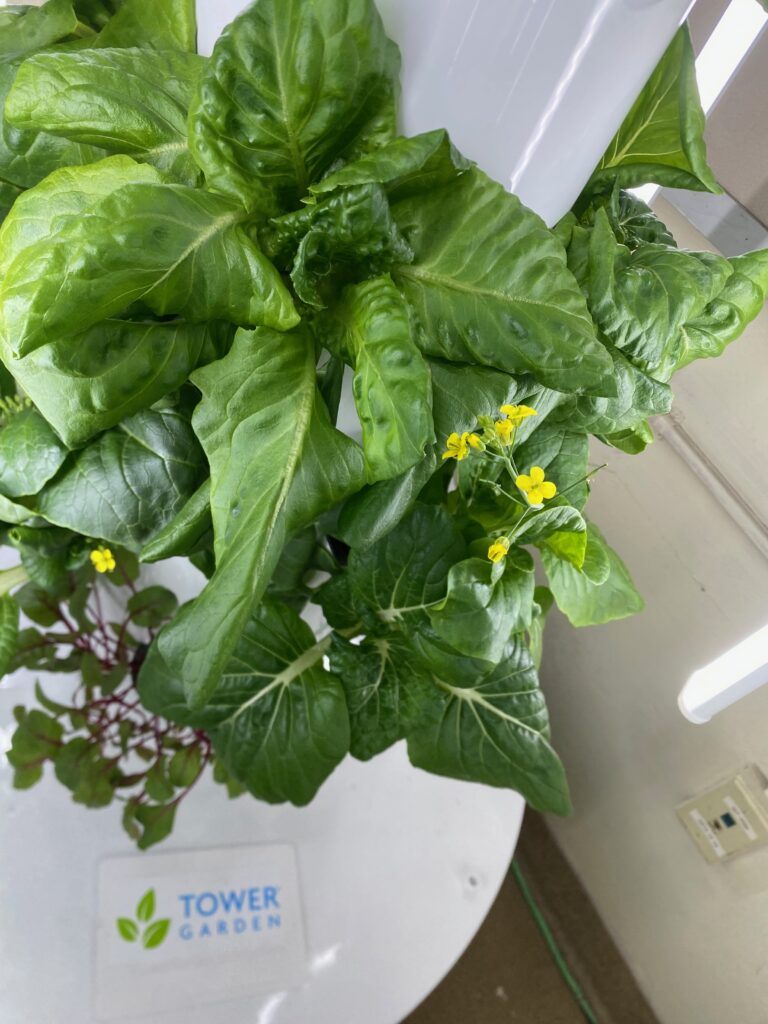
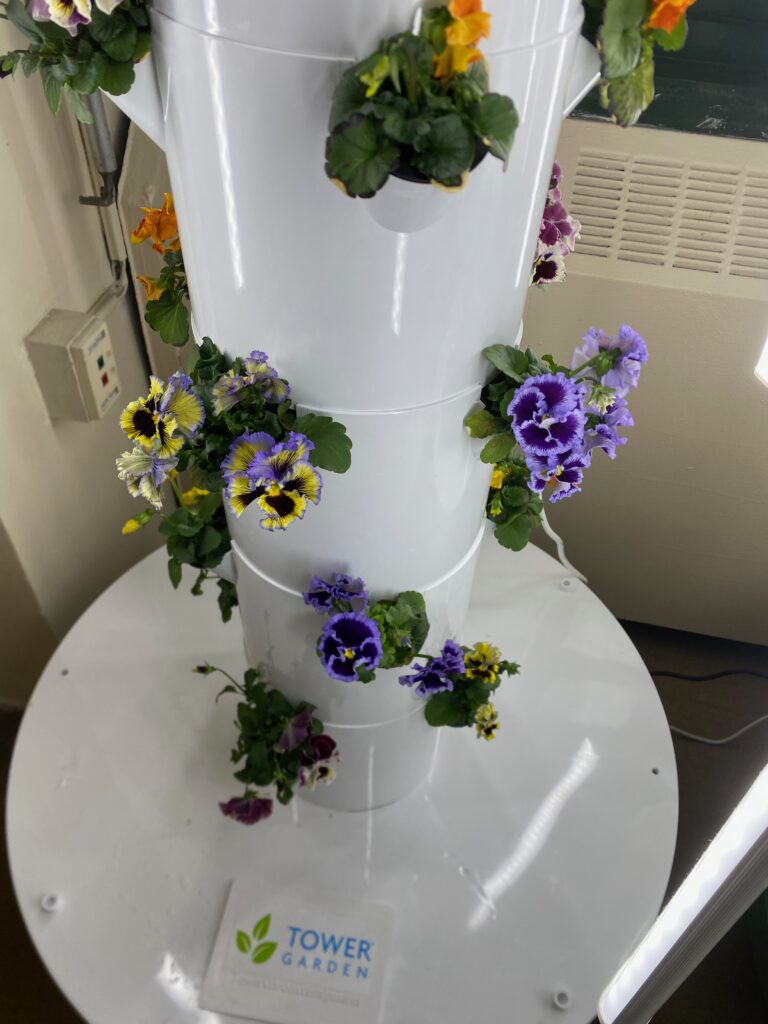
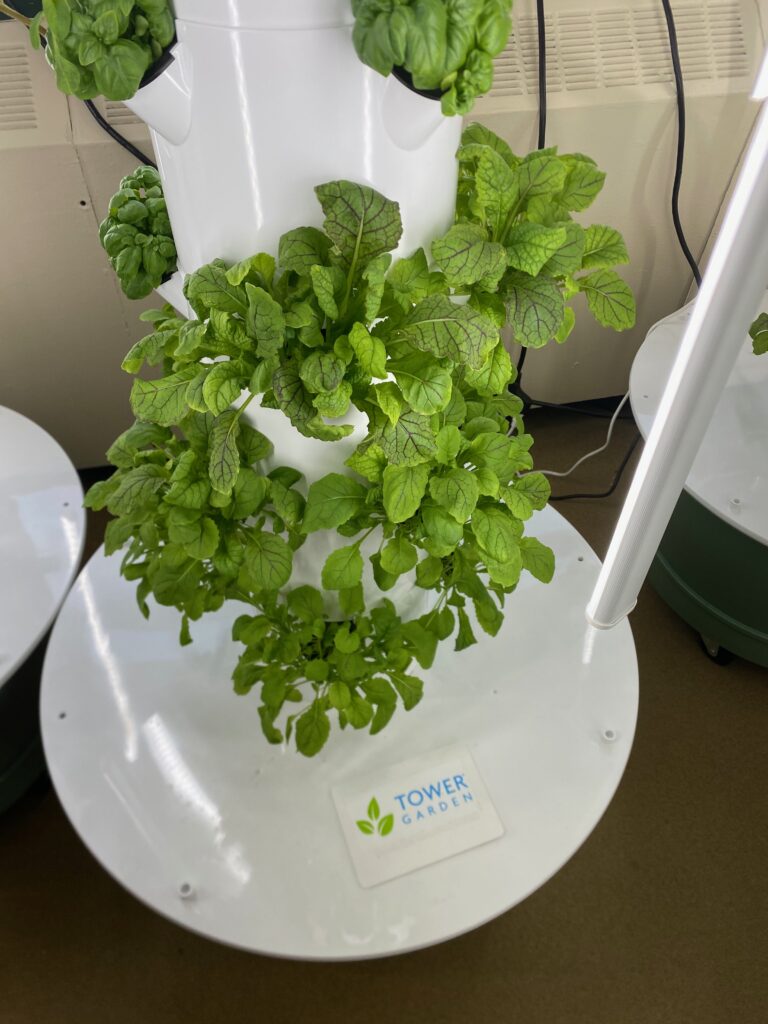
Imagine walking through schools and seeing students tending to vertical towers producing hundreds of pounds of fresh lettuce, herbs, and peppers each month. They’re empowered not only to provide food for themselves but also for their families and neighbors. These same students walk to nearby churches, delivering harvests while congregation members teach them how to prepare traditional Puerto Rican and Dominican dishes, sharing stories of resilience and recipes passed down through generations.
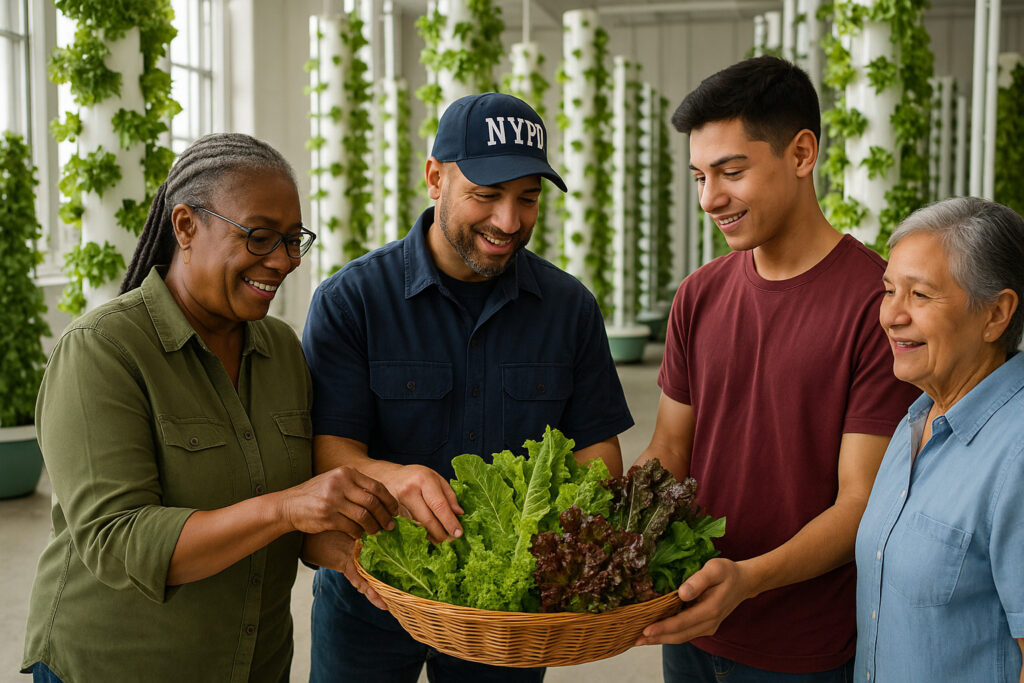
Now imagine a police officer, not in uniform but in work clothes, hands in nutrient-rich water, helping those same students check pH levels and harvest tomatoes at the NYPD OPTIONS Center and local precincts. He shows up not as an authority figure, but as a partner. Not enforcing, but nurturing. Not surveilling, but serving. These officers take fresh produce home to their families while contributing harvests to quarterly community gatherings.
Finally, imagine all three groups—students, congregation members, and officers—gathering quarterly around tables filled with food they grew together, cooking meals that honor cultural traditions, sharing laughter and stories in both English and Spanish, building the kind of trust that can only come from genuine partnership and shared accomplishment.
The Tri-Sector Partnership Model
The saturation model succeeds through strategic partnership across three community sectors, each contributing unique strengths while benefiting from shared food production:
Students (at schools):
Serve as the network’s workforce, operating real food production systems that feed their community. Unlike educational gardens where students learn about farming, Food for Change students do the actual work of feeding families—maintaining hydroponic systems, harvesting 400+ pounds monthly per school, and delivering produce to houses of worship for distribution.
• Operate production systems that generate substantial food quantities for community benefit
• Develop technical skills in hydroponic farming, pH monitoring, and plant biology through real production work
• Build leadership by managing food systems their neighbors depend on
• Improve academic performance as family food security increases
• Create pathways to $35,000-45,000/year urban agriculture careers through hands-on production experience
Houses of Worship (churches, mosques, synagogues):
Function as the primary community distribution hubs where residents receive free produce. Congregations determine what crops to grow based on cultural preferences and members teach traditional cooking methods, preserving cultural heritage while meeting immediate food needs. Churches bring their existing community networks, trusted relationships, and physical space to serve as anchor institutions for food distribution.
• Serve as dignified distribution hubs rather than charity sites
• Preserve cultural food knowledge through intergenerational cooking instruction
• Leverage existing community trust and social networks
• Direct crop selection based on traditional Latino and Caribbean preferences
• Extend ministry mission through tangible community service
Police (at precincts):
Maintain their own precinct farms, take produce home for personal and family use, and contribute produce to quarterly Community Table events for broader community sharing. This dual benefit—personal and community—transforms officers from enforcers to food providers.
• Build authentic relationships through shared agricultural work
• Reduce community tension through positive engagement opportunities
• Take fresh produce home while contributing to community events
• Shift from enforcement-based to care-based community interaction
All partners become community ambassadors, sharing information about SNAP enrollment, food pantries, and nutrition programs. Research shows hydroponic farming networks foster social capital through community participation, knowledge sharing, and collective action, with saturation models showing the strongest impacts.
Network Scale & Impact
The saturation model creates measurable transformation across food security, education, community safety, and social cohesion through unprecedented scale and interconnection:
Current Production
• 2 operational schools: ~800 pounds monthly
• 400+ pounds per school per month from 12 hydroponic towers each
• 20 student leaders at M.S. 129 managing farm operations
2026 Targets
• 10 sites operational by September 2026
• 4,000+ pounds monthly production
• First police-community partnership through NYPD OPTIONS Center
• 400+ students engaged across all sites
Full Saturation by 2027
• 40 working farms producing fresh, culturally-relevant food (leafy greens, cilantro, recao, peppers, tomatoes)
• 16,000+ pounds monthly (192,000+ pounds annually)
• 9,000-24,000 families served through church distribution
• $500,000+ annual retail value equivalent
Expected Impact
The saturation model creates measurable transformation across multiple dimensions of community wellbeing, with specific targets that demonstrate the unprecedented scale of this first-of-its-kind food production initiative:
Food Security
• Distribute 120,000-360,000 pounds annually to 9,000-24,000 families through schools and churches, plus additional households through police officers and community events
• Increase SNAP enrollment by 20% through community ambassador outreach at all sites
• Increase farmers’ market participation by 30% as families gain confidence accessing fresh produce
Social Capital
• Create 25-30 ‘third spaces’ at EVERY site where meaningful work builds authentic relationships across generations and institutions
• Fundamentally transform police-community relationships through care-centered partnership and shared food production
• Build coalition of 50+ organizations supporting the saturation model
Community Capacity
• Ensure 80% of residents know available food resources within 12 months
• Distribute 10,000+ bilingual resource guides through all network sites
• Train community ambassadors at ALL sites for sustained local leadership
Health & Cultural Preservation
• Support chronic disease management through increased access to fresh, culturally-relevant produce
• Preserve cultural food traditions through intergenerational cooking instruction at Community Table events
• Empower communities to grow their own food at every institution rather than depending on external charity
Economic Value
Production Volume: Up to 360,000 pounds annually across all sites
Retail Value Equivalent: $360,000-$1,080,000 (calculated at $3/pound average retail price for organic produce)
Household Savings: Each family receiving produce saves $40-120 monthly on groceries
Direct Beneficiaries: 9,000-24,000 families through church distribution + police households
Workforce Development: Training creates pathways to $35,000-45,000/year urban agriculture positions
Note: While produce is distributed free, the retail value equivalent demonstrates the economic impact on household food budgets and the scale of community investment.
Community Table Events
Quarterly bilingual gatherings represent the heart of Food for Change’s transformative power. Students, congregation members, and officers cook traditional Puerto Rican, Dominican, and Caribbean meals with farm produce from all sites, creating vital ‘third spaces’ for healing and connection while distributing fresh food to the broader community.
These events accomplish multiple community-building objectives simultaneously:
• Honor cultural heritage through traditional cooking methods using farm-fresh ingredients
• Build new relationships across generational and institutional lines
• Distribute fresh food to broader community through celebration rather than charity
• Strengthen social capital through shared meals and storytelling
• Preserve food knowledge as church elders teach students traditional recipes
Evidence-Based Success
Our approach is validated by peer-reviewed research showing that saturated, networked hydroponic systems:
• Increase food availability by 40-60% when operating at scale
• Show 3x greater community participation than isolated approaches
• Improve institutional trust by 25-30% through sustained engagement
• Create 5x higher sustainability rates than isolated initiatives
• Correlate with improved academic performance when students have reliable family food security
• Reduce community-police tension through positive engagement opportunities
Studies confirm that when institutions actively engage through sustained involvement at their own sites rather than just hosting programs, authentic relationships develop and community resilience strengthens.
Advancing Health Equity
Food for Change centers equity by operating in a federally recognized disadvantaged community with concentrated poverty, food insecurity, and chronic disease burden. All programming is bilingual, honoring that 54% speak Spanish as primary language. Crops and recipes honor Latino and Black food traditions.
Police participation at their own precinct farms represents a paradigm shift from enforcement to care, with officers both benefiting personally and contributing to community wellbeing, building trust in communities historically harmed by over-policing. The saturation model ensures no institution is left out—every school, house of worship, and precinct becomes a site of food production and community building.
The model empowers residents to control food production at every community institution rather than depending on charity, creating food sovereignty and pathways to economic opportunity.
Implementation Timeline
The saturation model follows a strategic expansion timeline that ensures sustainable growth while maintaining quality relationships and community trust:
2025: Foundation built with M.S. 129 and Wings Academy proving the model works—students developing leadership skills, families receiving fresh produce, community relationships strengthening
2026: Expand to 10 sites including The Cinema School, Metro Soundview High School, and the historic first police partnership at NYPD OPTIONS Center
2027: Achieve full saturation—40 farms transforming a concentrated area where every resident is within walking distance of community-controlled food production
Ongoing: Community-sustained operations with trained local stewards, cultural programming, and workforce development ensuring the transformation becomes permanent
Long-term Sustainability
Once systems are installed at all sites and partnerships established, farms are maintained by trained community members at each location. The saturation model creates its own sustainability through institutional integration and community ownership:
• Schools integrate food production systems as permanent infrastructure—not curriculum add-ons, but essential community food sources
• Churches integrate programming into ministry activities and serve as ongoing distribution hubs
• Police precincts embed partnerships into wellness initiatives with officers maintaining farms and participating in community events
• Community members become trained stewards with career pathways in urban agriculture
The saturation model creates its own sustainability—when every institution has a farm, maintenance becomes routine. When every sector participates, community support solidifies. When entire neighborhoods benefit, local investment ensures continuation. Research confirms that agricultural projects reaching saturation scale have 5x higher sustainability rates than isolated initiatives.
Why This Matters & Call to Action
Food is the foundation of society and a universal language. When a child plants seeds alongside a police officer at a precinct farm, stereotypes dissolve. When a congregation member teaches traditional recipes at a Community Table featuring produce from every site, cultural heritage is preserved. When residents grow their own food at every community institution, dignity is restored and power shifts from charity to sovereignty.
Food for Change proves that the solution to food insecurity, educational barriers, community safety concerns, and social disconnection begins with community empowerment through saturation, not dependency. By establishing 40 hydroponic farms where every school, house of worship, and police precinct participates and unlikely partners work together, this initiative will create thriving community spaces at every institution where authentic partnerships flourish and transform relationships through shared production and distribution.
The Bronx is ready. The community is hungry—not just for food, but for connection, dignity, and hope. The partners are committed. The infrastructure for complete saturation is designed. The methodology is proven. The research validates the saturation approach. The moment is now.
Join us in using food as a powerful change agent to nourish bodies, rebuild trust, strengthen social capital, reduce crime, enhance education, and transform communities from the inside out through the first-ever institutional saturation approach.
When we plant seeds together at every site, we grow hope together.
When we harvest together from every farm, we celebrate together.
When we eat together from what we all grew, we become community together.
Food for Change: Growing more than vegetables at every institution—growing connection, trust, and transformation through saturation.
Contact Information
Center for Food As Medicine and Longevity (CFAM)
17 E. 17th St., FL 4, New York, NY 10003
Email: info@foodmedcenter.org
Phone: (212) 367-7575
EIN: 84-2745309 | 501(c)(3) tax-exempt organization