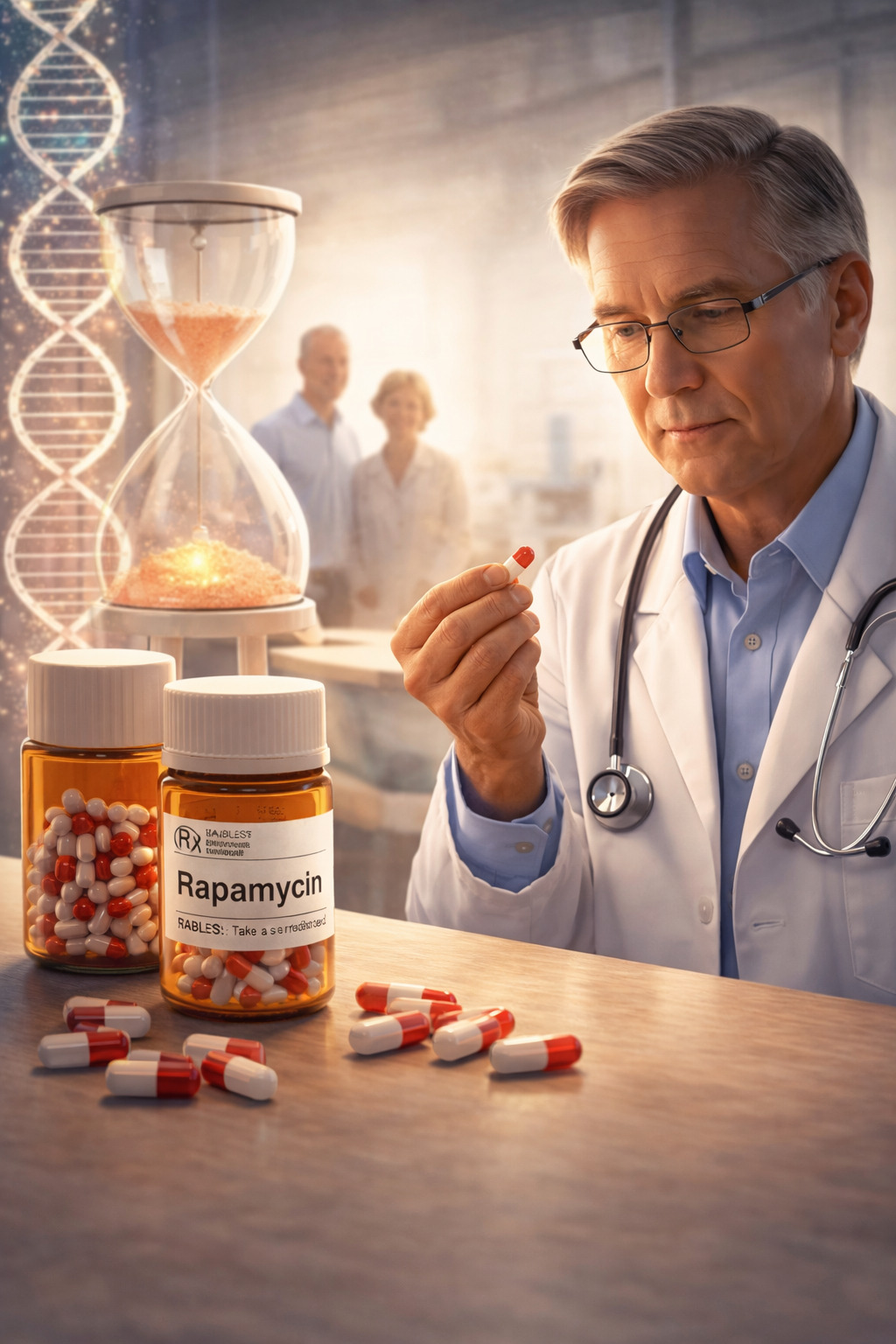
Somewhere in the United States right now, an estimated thousands of otherwise healthy adults over the age of fifty are swallowing a small white pill once a week that was designed to keep transplant patients from rejecting a new kidney. The drug is called rapamycin, also known by its generic name sirolimus. It is not approved for anti-aging use. It is not covered by insurance for this purpose. And the scientific question at the center of the entire phenomenon — does it actually slow human aging? — remains, as of early 2026, unanswered.
A Drug That Extended Mouse Lifespan by Twenty-Five Percent — and the Human Question Nobody Can Answer Yet
The enthusiasm is not irrational. Rapamycin is the single most replicated life-extending drug in laboratory history. In mice — small, short-lived mammals that share a surprising amount of biology with humans — it reliably extends lifespan, often in the range of ten to twenty-five percent depending on strain, sex, dose, and timing, even when given to animals that are already old. These results have been confirmed across multiple laboratories funded by the National Institute on Aging. No other drug in geroscience — the scientific field that studies the biology of aging — has been as consistently replicated in mammals.
And yet the distance between a mouse and a human being is vast. In 2025, the results of the first year-long, rigorously designed human trial of rapamycin for healthy aging were published — the PEARL trial — and what they showed was neither triumph nor failure. The drug appeared safe. It did not reduce belly fat, which was the study’s main goal. But in women who took the higher dose, it improved lean muscle mass and reduced pain. And the single most important question — whether rapamycin can actually turn back the biological clock, as measured by the sophisticated molecular tests scientists have developed to distinguish biological age from calendar age — was not tested at all.
Meanwhile, the longevity industry has learned to sell numbers: biological age readouts, pace-of-aging scores, immune-age dashboards, and risk calculators that promise to tell you how fast your body is deteriorating. Rapamycin has become the drug that promises to make those numbers move in the right direction. But selling a number is not the same as proving it moves, and proving it moves is not the same as proving that the person attached to the number actually lives better or longer.
The stakes of getting this right are not abstract. People are making real medical decisions based on incomplete information, spending real money on prescriptions their insurance will not cover, and assuming real risks with a drug whose most important claims remain untested in the species that matters most: our own. Some of those people have conditions — including active cancer — where rapamycin may be not merely unhelpful but actively dangerous. This article lays out what the published, peer-reviewed science actually says, including the parts that are exciting, the parts that are disappointing, the parts that are genuinely dangerous for certain people, and the large, important parts that remain completely blank.
How Rapamycin Works: The Dimmer Switch Inside Every Cell
To understand what rapamycin does, you first need to know where it comes from, because its origin story says something important about the drug’s identity. Rapamycin was first isolated from soil samples collected on Rapa Nui, also known as Easter Island, and its name reflects that origin. It began as an antifungal agent, a reminder that many of modern medicine’s most influential drugs were discovered not by designing molecules on a computer but by finding what biology had already evolved. Over decades, rapamycin found its way into transplant medicine (where it prevents organ rejection), cardiology (where it coats stents to keep arteries from re-narrowing), and oncology (where its derivatives are used to slow certain tumors). These are not fringe uses. They are mainstream, FDA-approved applications in which the drug’s mechanism — turning down a fundamental growth pathway — is the clinical rationale.
That pathway is controlled by a molecule inside your cells called mTOR, which stands for “mechanistic target of rapamycin.” Think of mTOR as a dimmer switch — not for the lights, but for growth. Every cell in your body has this switch, and it constantly reads environmental signals: Are nutrients available? Is there plenty of energy? When the answer is yes, mTOR cranks the dimmer up to full brightness, telling the cell: build new proteins, grow, divide. This is essential during childhood and after an injury.
The problem is that when this dimmer stays on high all the time — which it does in most modern humans, because we eat frequently and rarely experience prolonged hunger — the cell never switches into maintenance and repair mode. Think of a factory that runs its production line around the clock but never shuts down for maintenance. Damaged proteins accumulate. Defective power generators inside the cell (called mitochondria) keep churning out toxic byproducts. Old, worn-out cells that should have been cleared away instead sit there pumping out inflammatory chemicals. Scientists call these stubborn cells “senescent” cells — think of employees who have retired but refuse to leave the office, and worse, keep loudly complaining to everyone around them, creating chronic damage to neighboring tissue.
Rapamycin turns down this dimmer switch. It partially blocks mTOR, mimicking some of what happens when you fast or severely restrict calories. The cell shifts into cleanup mode, activating a recycling process called autophagy (from the Greek for “self-eating”), where damaged components are broken down and recycled. It begins clearing out senescent cells and reducing the chronic, low-grade inflammation that scientists believe plays a role in heart disease, dementia, diabetes, and many other diseases of aging.
A critical technical distinction makes the longevity use of rapamycin conceivable. mTOR exists in two configurations: mTORC1 and mTORC2. The anti-aging benefits appear to come from turning down mTORC1, the growth machine. The side effects transplant patients experience — high blood sugar, high cholesterol, weakened immunity — come largely from turning down mTORC2, the metabolic-and-immune machine. Research published in Aging Cell in 2016 by Arriola Apelo and colleagues showed that giving rapamycin once a week instead of every day turns down mTORC1 while leaving mTORC2 mostly alone, because mTORC1 is disrupted by brief exposure while mTORC2 requires prolonged, continuous exposure. A weekly dose dims the growth switch on dosing day and gives the metabolic switch six days to recover.
One more piece of biology matters. As cells age, their DNA accumulates tiny chemical tags called methyl groups in patterns so predictable that scientists can use them as a clock — an “epigenetic clock” — to estimate biological age, which may be older or younger than calendar age. If rapamycin could demonstrably slow these marks in a living person, it would be the strongest possible evidence that the drug truly slows aging. Whether that has been shown is the central question of this article.
What the Science Actually Shows
The PEARL Trial: The Best Human Evidence We Have
The most important human evidence comes from the PEARL trial, published on April 4, 2025, in Aging, by Moel, Harinath, Lee, Nyquist, Morgan, Isman, and Zalzala. This was a randomized controlled trial (RCT) — the gold standard of medical research, where participants are randomly assigned to receive either the real treatment or a placebo (an identical-looking inactive pill), and neither participants nor researchers know who is getting what until the study ends. This design eliminates the possibility that benefits are caused by the placebo effect.
The trial enrolled healthy adults aged fifty to eighty-five and randomly assigned them to five milligrams of rapamycin once per week, ten milligrams once per week, or placebo for forty-eight weeks. The primary endpoint — the main question the study was designed and powered to answer — was whether rapamycin would reduce visceral adiposity, the deep belly fat linked to heart disease and diabetes.
The answer was no. The synthesis documents report that rapamycin did not significantly reduce visceral fat compared to placebo. The exact p-value for this primary comparison is not provided in the syntheses and should be confirmed in the primary publication. Evidence rating: STRONG for a null result.
However, secondary analyses revealed a more complex picture. Among women receiving ten milligrams weekly, lean tissue mass improved significantly (epsilon-squared = 0.202, p = 0.013, meaning roughly a 1 in 77 chance this was a fluke, with a medium-to-large effect size). Self-reported pain also improved in this group (partial eta-squared 0.168, p = 0.015). At five milligrams weekly, improvements appeared in self-reported emotional well-being and general health, though exact p-values for these outcomes are not reported in the syntheses.
A critical caveat: these come from secondary and subgroup analyses, not the pre-specified primary endpoint. When researchers examine many subgroups after the main analysis, some will appear significant by chance — a phenomenon called multiple comparisons. These findings should be treated as strong hypotheses requiring confirmation in dedicated trials. Evidence rating: MODERATE for sex-specific benefits.
Safety over forty-eight weeks was broadly reassuring: overall adverse events were similar between rapamycin and placebo groups, though gastrointestinal symptoms were more common in the rapamycin arms, and a few laboratory markers shifted modestly (for example, a small HbA1c signal in one subgroup) while generally remaining within normal ranges. No major immunosuppression or metabolic derangement was reported. Evidence rating: STRONG for one-year safety in healthy adults, with the caveat that mild GI effects and minor lab shifts should be monitored.
Table 1: PEARL Trial Key Outcomes (Moel et al., Aging, 2025)
| Outcome | Population | Result | Effect Size / p-value | Evidence Rating |
|---|---|---|---|---|
| Visceral fat (primary) | All participants | No significant change vs. placebo | NR in synthesis | STRONG (null) |
| Lean tissue mass | Women, 10 mg/wk | Significant improvement | ε² = 0.202; p = 0.013 | MODERATE (secondary) |
| Self-reported pain | Women, 10 mg/wk | Significant improvement | ηp² = 0.168; p = 0.015 | MODERATE (secondary) |
| Well-being / general health | All, 5 mg/wk | Improvement (self-reported) | Reported significant; exact p NR | MODERATE |
| Bone mineral content | All participants | No significant change | NR in synthesis | STRONG (null) |
| Safety / blood biomarkers | All participants | Broadly similar to placebo; GI symptoms more common; minor lab shifts within normal ranges | NR in synthesis | STRONG |
NR = not reported in synthesis documents. Secondary analyses are hypothesis-generating. ε² = epsilon-squared; ηp² = partial eta-squared (both are measures of effect size).
The Smaller Pilot Trial and Systematic Reviews
Before PEARL, a smaller pilot RCT published in Experimental Gerontology in 2018 by Kraig, Linehan, Liang, and colleagues tested one milligram daily for eight weeks in adults averaging approximately eighty years old. The study found no significant improvements in cognitive tests, grip strength, or timed walks compared to placebo. Small increases in triglycerides and HbA1c (a blood sugar measure) were observed without clinical significance. Common mild side effects included mouth sores, facial rash, and digestive discomfort — seemingly minor on a safety report, but mouth sores disrupt eating, speaking, and social life, which is itself a healthspan cost. The short duration, daily dosing schedule, and very elderly population likely explain the negative findings.
A systematic review published in The Lancet Healthy Longevity in 2024 by Lee, Hodzic Kuerec, and Maier examined all available human rapamycin data. A systematic review is a study of studies: researchers methodically gather every published trial on a topic, assess their quality, and synthesize the findings into an overall conclusion. This review found improvements in the immune system, cardiovascular system, and skin, but no significant effects on muscles or the brain. Serious side effects were rare in healthy individuals, but increased infections and cholesterol elevations were noted in people with pre-existing diseases. This distinction matters enormously: what is safe for a healthy sixty-year-old may not be safe for a seventy-five-year-old with diabetes and heart disease.
A comprehensive clinical review published in Aging on August 7, 2025, by Hands, Lustgarten, Frame, and Rosen at George Washington University and Tufts University examined the full body of evidence for off-label rapamycin use in healthy adults. The authors found that fewer than a dozen known trials have explored rapamycin or its analogues in humans, covering biomarkers including immune function, protein synthesis, and hematologic parameters. Their overall conclusion aligns with the PEARL findings: despite robust preclinical evidence, human data have not yet established that rapamycin is an effective seno-therapeutic for delaying aging in healthy older adults. The review also surfaces several signals worth examining in detail, discussed in the sections below.
Two additional comprehensive research syntheses — one through the Elicit platform (500 papers screened) and one through the Consensus platform (948 papers screened, 46 included) — both concluded that low-dose intermittent rapamycin appears safe over approximately one year but there is insufficient evidence that it slows biological aging. The Elicit analysis, applying the strictest criteria — requiring randomized controlled trials, placebo controls, validated aging biomarkers, and at least twelve weeks of treatment — found zero qualifying sources that directly examined long-term oral rapamycin in otherwise healthy human adults. Much of the available human rapamycin data outside of the PEARL trial actually comes from topical skin application studies lasting six to eight months, which showed reductions in local senescence markers but cannot tell us anything about what happens when the drug circulates through the entire body. A cream applied to aging skin is biologically interesting, but it is not evidence that a pill swallowed weekly will improve walking speed or reduce frailty.
Table 2: Systematic Reviews and Research Syntheses
| Source | Journal / Platform | Sources Included | Key Conclusion | Evidence Rating |
|---|---|---|---|---|
| Lee et al., 2024 | The Lancet Healthy Longevity | Multiple human studies | Immune, cardiovascular, skin improvements; no muscular/neurological effects | STRONG for safety; MODERATE for system-specific |
| Hands et al., 2025 | Aging (journal) | Clinical review of all available human trials | Evidence insufficient to affirm longevity benefit; PhenoAge modeling suggests potential -3.96 yr biological age signal (imputed, modeled); larger trials urgently needed | STRONG for evidence gap; PRELIMINARY for PhenoAge signal |
| Consensus analysis, 2026 | Consensus platform | 46 papers (948 screened) | Safe ~1 year; no proof of biological age slowing; modest sex-specific signals | STRONG for safety; PRELIMINARY for healthspan |
| Elicit analysis, 2026 | Elicit platform | 5 papers (500 screened) | Zero sources examined long-term oral rapamycin in healthy humans with validated aging biomarkers | N/A — evidence gap |
The Elicit analysis applied the strictest screening criteria and found no qualifying studies for the specific research question.
The Missing Piece: Can Rapamycin Turn Back the Biological Clock?
Here is the most important fact in this article: no completed human trial has measured whether rapamycin slows biological aging using the molecular tools — epigenetic clocks — that scientists developed for this purpose. To understand why this matters, recall those chemical tags (methyl groups) that accumulate on DNA in predictable patterns as you age. Scientists led by pioneers like Steve Horvath, PhD, have built algorithms that read these patterns and output a number: your biological age. Research has shown this number predicts your risk of disease and death independently of how many birthdays you have had. Multiple versions of these clocks exist: GrimAge and PhenoAge estimate risk-related aspects of aging, while DunedinPACE estimates the rate at which you are aging, like a speedometer rather than an odometer. If rapamycin could demonstrably lower these numbers in a living person, it would be the strongest possible evidence of a true anti-aging drug.
The preclinical evidence is tantalizing. Horvath and colleagues (Aging, 2019) showed rapamycin slowed epigenetic aging in human skin cells in the laboratory. Yin, Guo, Qi, and colleagues (Genes, 2022) found it reduced age-related DNA methylation changes in mouse brains. A review by Unnikrishnan, Freeman, Jackson, and colleagues (Pharmacology & Therapeutics, 2019) estimated rapamycin can reverse or prevent twenty to forty percent of age-related methylation changes in mice.
But a 2021 study in GeroScience by Horvath, Zoller, Haghani, and colleagues tested rapamycin in common marmosets — primates much closer to humans than mice — and found no significant effect on biological age in blood samples. If the drug’s effects do not translate from mice to a primate, how confidently can we assume they translate to humans?
One recent human study pushes the needle forward indirectly. Research in Aging Cell in 2026 by Kell, Jones, Gharahdaghi, and colleagues found that low-dose rapamycin significantly reduced p21, a marker of cellular senescence (the process by which damaged cells permanently stop dividing), in immune cells from older adults. But p21 is not an epigenetic clock. It is a piece of the wall, not the whole building.
The most notable new development on biological age comes not from a direct measurement but from a modeling exercise published in the August 2025 Hands et al. review. The authors applied the PhenoAge algorithm — a biomarker-based aging clock developed by Levine and colleagues that correlates strongly (0.94) with chronological age and predicts all-cause mortality risk — to the published group-level data from the Kraig trial. Using the mean biomarker values reported for each group, and imputing age-expected values for two markers that were not measured in the original trial (C-reactive protein and lymphocyte percentage), they estimated that the rapamycin-treated group showed a net biological age reduction of approximately 3.96 years over the eight-week study, compared to a 0.15-year increase in the placebo group.
This finding is genuinely interesting, but its limitations are significant and should be understood before treating it as confirmation of an anti-aging effect. The analysis was based on group averages rather than individual participant data, which prevented statistical significance testing. Two key inputs into the PhenoAge formula were not measured in the original trial and had to be assumed based on population norms. The Kraig trial itself used daily rather than the now-preferred weekly dosing, ran for only eight weeks, and enrolled a very elderly population averaging around eighty years old. And PhenoAge, while validated as a predictor of mortality risk, has documented limitations when used to evaluate any single intervention. What the Hands et al. modeling suggests is that the biomarker shifts seen in the Kraig cohort, if representative, could translate into a meaningful biological age signal. What it does not show is that an actual clock measurement — pre-specified and validated — was run on participants taking rapamycin in a controlled trial and returned a younger number. That trial has still not been done.
This gap illustrates what scientists call biomarker-clinical dissociation: a molecular marker can improve while the person does not actually function better, or a person can feel genuinely better while standard molecular markers do not budge. The PEARL trial found pain reduction in women without measuring any epigenetic clock. A future trial might shift a clock without improving grip strength or walking speed. Without measuring both simultaneously, interpretation remains contested. No rapamycin trial in healthy adults has yet done that. Evidence rating: PRELIMINARY for biological age effects in humans. The Hands et al. PhenoAge modeling represents the first published estimate of biological age change from human rapamycin data, but it relies on imputed values and group-level averages and cannot substitute for a pre-specified, individually measured epigenetic clock outcome in a randomized trial.
Table 3: Evidence on Rapamycin and Biological Aging Markers
| Study (Author, Year) | Model | What Was Measured | Finding | Rating / Limitation |
|---|---|---|---|---|
| Horvath et al., Aging, 2019 | Human skin cells (lab) | Epigenetic clock | Slowed epigenetic aging | PRELIMINARY — lab cells only |
| Yin et al., Genes, 2022 | Mouse brain | Age-related DNA methylation | Reduced age-related changes | PRELIMINARY — animal |
| Horvath et al., GeroScience, 2021 | Marmoset blood | Epigenetic clocks | No significant effect | CONFLICTING — primate negative |
| Kell et al., Aging Cell, 2026 | Human immune cells | p21 (senescence marker) | Significant reduction | PRELIMINARY — not a clock |
| Hands et al., Aging, 2025 | Human (modeled from Kraig trial data) | PhenoAge (modeled, with imputed CRP and lymphocyte %) | Estimated net -3.96 yr biological age in rapamycin group vs. +0.15 yr in placebo | PRELIMINARY: group-level averages; two inputs imputed; no statistical significance testable |
No completed human RCT has measured validated epigenetic clock outcomes following systemic rapamycin. The Hands et al. entry is a modeling estimate, not a direct clock measurement.
Safety: What the Trials Tell Us About Risks
Rapamycin at transplant doses — ten to eighty times higher than longevity doses — causes real harm: weakened immunity, elevated blood sugar, elevated cholesterol, and increased infection risk. The evidence from longevity-dose trials paints a different but time-limited picture. The PEARL trial reports that overall adverse events were broadly similar between rapamycin and placebo over a full year, though gastrointestinal symptoms were more common in the rapamycin groups and a few laboratory markers shifted modestly while remaining within normal ranges. The Kraig trial detected small metabolic shifts but no clinical events over eight weeks. Research in Frontiers in Immunology in 2025 by Queiroz and colleagues confirmed in mice that intermittent dosing had minimal metabolic effects compared to daily dosing.
At low intermittent doses, rapamycin may actually improve certain aspects of immune function. A review in The Journal of the American Medical Association in 2025 by Kritchevsky and Cummings described a trial where the related drug everolimus improved flu vaccination response in adults over sixty-five. This makes sense when you understand that aging dysregulates the immune system: the part fighting specific threats weakens while chronic background inflammation becomes overactive. Low-dose mTOR inhibition appears to quiet the overactive inflammation while allowing targeted immune responses to function better.
The musculoskeletal picture is genuinely mixed. PEARL found improved lean mass in women at ten milligrams weekly, but a systematic review by Lin and colleagues (Aging Clinical and Experimental Research, 2022) noted preclinical evidence that rapamycin can reduce muscle protein building in response to exercise. The Hands et al. review adds nuance here: while one trial by Gundermann and colleagues showed that sixteen milligrams of rapamycin blunted post-exercise protein synthesis, a separate study by Dickinson and colleagues found no alteration in basal protein synthesis rates, raising the possibility that the relevant effects may be dose- and timing-dependent. Animal studies on bone point in opposite directions: rapamycin may protect aging bones (Luo and colleagues, Osteoporosis International, 2016) but harm growing ones (Martin and colleagues, Experimental Gerontology, 2021). PEARL found no significant bone changes.
The Hands et al. review also raises a theoretical concern that has not been widely discussed in longevity media: the possibility of rebound mTOR hyperfunction following the drug-free days in intermittent dosing schedules. The argument is that sustained mTOR inhibition on dosing days could trigger compensatory upregulation of mTOR activity in the days that follow, potentially offsetting some of the intended benefit. The authors note this concern could theoretically favor a consistent rather than purely intermittent schedule, though no long-term human data exist to resolve the question. It remains a hypothesis requiring prospective testing, not an established risk.
The Critical Exception: Active Cancer
There is one population for whom the rapamycin conversation changes fundamentally, and it is a population that longevity media rarely discusses with adequate seriousness: people with active, untreated cancer. While rapamycin and its derivatives (everolimus, temsirolimus) are FDA-approved for treating specific cancers — including renal cell carcinoma, certain breast cancers, and pancreatic neuroendocrine tumors — at high treatment doses under oncologist supervision, that is an entirely different scenario from taking low-dose rapamycin off-label for longevity when an active malignancy is present.
The reason is a biological paradox that runs counter to what most people would expect. When rapamycin blocks the mTORC1 growth pathway, cancer cells do not simply stop growing and wait. In many tumor types, blocking one growth pathway triggers what scientists call compensatory activation: the cancer cell’s survival machinery reroutes through alternative pathways to keep growing. Multiple studies have documented that rapamycin can trigger activation of a molecule called AKT, a major pro-survival signal in cancer cells, through feedback mechanisms involving other growth pathways. In the context of normal aging, this compensatory activation may be manageable. In active cancer, it could fuel tumor growth through the very pathways the drug leaves open.
Even more alarming, preclinical studies have found that rapamycin can promote metastasis — the spread of cancer from one site to other parts of the body — in certain tumor models. In a mouse mammary tumor model, rapamycin treatment after tumor removal drastically increased the metastatic activity of remaining cancer cells. In one rat model of pancreatic neuroendocrine cancer, treatment with the rapamycin derivative RAD001 (everolimus) was reported to result in distant metastasis in approximately seventy-seven percent of treated animals, compared to zero percent in untreated controls — a single preclinical finding that should not be generalized across all tumor types but that illustrates the potential severity of the risk. The mechanism appears related to rapamycin’s suppression of anti-tumor immune surveillance: by dampening the immune cells that normally patrol for and destroy spreading cancer cells, the drug may allow dormant cancer cells to proliferate and spread.
This immune dimension is critical. Research on cancer vaccine therapy has found that rapamycin at immunosuppressive doses completely abolished the recruitment of CD8+ T cells — the immune system’s primary cancer-killing cells — into tumors, and completely abolished the anti-tumor immune responses that vaccines are designed to generate. While low intermittent longevity doses may have different immune effects than the doses used in these studies, the immune system in someone with active cancer is fundamentally different from that of a healthy person. It is already attempting to fight the tumor, and any suppression of that effort could be detrimental.
One nuance from the Hands et al. review is worth noting here. The authors observe that there is currently no published literature on cancer incidence or prevalence specifically in healthy, non-immunocompromised adults taking low-dose rapamycin. The cancer risk data that do exist come almost entirely from transplant populations receiving immunosuppressive-range doses, often in combination with other agents, making direct inference to a healthy longevity-dose cohort difficult. In a meta-analysis of kidney transplant patients, high-dose sirolimus was associated with lower kidney and skin cancer risk compared to other immunosuppressive regimens, though with a potentially elevated prostate cancer risk whose causality the authors considered unclear and possibly artifactual. None of this changes the core warning for people with active cancer, because the preclinical evidence on compensatory tumor pathway activation, metastasis promotion, and anti-tumor immune suppression remains serious regardless of what transplant-dose outcome data show in a different population.
A meta-analysis of cancer patients treated with mTOR inhibitors, published by Choueiri and colleagues in Annals of Oncology in 2013, found a 2.2-fold increased risk of fatal adverse events compared to controls. That risk is acceptable when the drug is being used to treat the cancer itself under specialist supervision. It is not acceptable when the drug is being taken off-label for longevity by someone whose cancer requires different treatment. The bottom line: if you have active cancer or are undergoing evaluation or treatment for cancer, rapamycin-for-longevity is not a do-it-yourself decision. It requires explicit oncology oversight, because some tumor models show worsened metastasis and impaired antitumor immunity under certain conditions, and cancer-trial meta-analyses show higher fatal adverse-event risk with mTOR inhibitors. Evidence rating: STRONG for requiring oncology oversight in active cancer.
Table 4: Safety Signals, Trade-offs, and Contraindications
| Source | Regimen / Context | Domain | Finding | Evidence Rating |
|---|---|---|---|---|
| PEARL (Moel et al., 2025) | Weekly 5-10 mg, 48 wk | Metabolic, immune, AEs | Blood biomarkers broadly normal; AEs similar to placebo overall; GI symptoms more common in rapamycin arms | STRONG (safety) |
| Kraig et al., 2018 | Daily, 8 weeks | CBC, HbA1c, triglycerides | Small erythrocyte decrements; slight metabolic shifts | MODERATE |
| Lee et al., 2024 (review) | Various human regimens | Infections, lipids | Rare serious AEs in healthy adults; increased infections in clinical populations | STRONG (review) |
| Cancer preclinical studies | Rapamycin / RAD001 in tumor models | Metastasis, immune suppression | Paradoxical AKT activation; ~77% metastasis in one rat model vs. 0% in controls (single preclinical finding); abolished anti-tumor T-cell responses | STRONG (requires oncology oversight) |
| Choueiri et al., 2013 (meta-analysis) | Treatment-dose mTOR inhibitors | Fatal adverse events | 2.2-fold increased risk of fatal AEs vs. controls | STRONG |
AEs = adverse events. CBC = complete blood count. Longevity-dose safety data apply only to healthy adults without active cancer.
What This Means for You
The safety data are reassuring for one specific scenario: healthy adults without active cancer or significant comorbidities, taking five to ten milligrams once per week. Over forty-eight weeks, PEARL found no meaningful differences in side effects between rapamycin and placebo. But “short-term” means one year, and nobody knows what happens over five or ten years.
Weekly dosing is supported by both theory and data. Daily dosing showed more metabolic side effects and no functional benefits. Regular monitoring is essential: complete blood count, lipid panel, fasting glucose, HbA1c, and liver and kidney function. Oral ulcers should be tracked as a tolerability indicator, not dismissed.
No human trial has shown that rapamycin reverses biological aging, improves cognitive function, or extends lifespan. The PEARL trial’s primary endpoint was negative. If you are taking rapamycin because you believe it is “reversing your biological age,” that claim is not supported by any completed human trial. The PhenoAge modeling in the Hands et al. review is a preliminary signal worth watching, but a modeled estimate based on imputed values is not the same as a trial result.
Rapamycin is not a substitute for the lifestyle interventions that have the deepest evidence base: regular exercise (both resistance training and aerobic activity), adequate protein intake, a nutrient-dense diet, quality sleep, and social engagement. These remain the foundation of healthy aging, supported by decades of research across millions of participants. Because mTOR is a nutrient-sensing pathway, dietary protein, energy balance, and exercise all influence the same biology rapamycin targets. A drug that shifts nutrient sensing may produce different effects in a person consuming a high-protein diet than in a person on a moderate-protein diet, and different effects in someone who lifts weights regularly than in someone who is sedentary. An ongoing trial combining weekly sirolimus with exercise implicitly recognizes these synergy effects. In practice, any investigation of rapamycin should occur alongside, not instead of, established healthspan strategies.
There is also an ethical dimension that often disappears in the enthusiasm. The existence of widespread off-label use does not make a therapy validated. It increases the ethical urgency of obtaining clear evidence, because people will use the drug regardless of what scientists recommend. The responsible response is not moral condemnation but rigorous trials, transparent reporting of both positive and negative results, and a refusal to let marketing substitute for methodology.
If you have active cancer or are undergoing cancer evaluation or treatment, do not take rapamycin for longevity without explicit oncology oversight. The preclinical evidence on paradoxical tumor promotion, metastasis enhancement, and anti-tumor immune suppression means that the risk-benefit calculation in active cancer is fundamentally different from that in healthy aging. Cancer treatment decisions involving mTOR inhibitors belong under oncologist supervision at treatment-appropriate doses. Never reduce or discontinue prescribed medications without your physician’s guidance.
Table 5: Practical Recommendations with Evidence Ratings
| Recommendation | Evidence Rating | Key Source(s) |
|---|---|---|
| Weekly intermittent dosing (5-10 mg) rather than daily | STRONG | PEARL trial; Arriola Apelo et al., Aging Cell, 2016 |
| Regular blood monitoring (CBC, lipids, glucose, HbA1c, liver/kidney) | STRONG | PEARL; Kraig et al., 2018; Lee et al., 2024 |
| Do NOT use for longevity with active cancer without explicit oncology oversight | STRONG | Preclinical cancer studies; Choueiri et al., Annals of Oncology, 2013 |
| Caution in metabolic disease, dyslipidemia, or immune compromise | STRONG | Lee et al., Lancet Healthy Longevity, 2024 |
| Do not expect cognitive, lifespan, or biological age benefits at this time | STRONG (absence of evidence) | All sources; no human RCT supports these claims |
| Maintain exercise and dietary fundamentals alongside any use | STRONG (for lifestyle) | Decades of independent exercise/diet research |
Rapamycin for longevity is not FDA-approved. All use is off-label and should involve physician supervision.
Where the Science Stands — Honestly
Low-dose intermittent rapamycin appears safe over one year in healthy adults over fifty who do not have active cancer. The PEARL trial, published April 4, 2025, in Aging, established this with a well-designed, year-long, placebo-controlled study, though gastrointestinal symptoms were more common in the rapamycin groups and minor laboratory shifts occurred. There are modest, sex-specific signals that it may improve lean muscle mass and reduce pain in women at the higher dose. There is indirect evidence that it reduces a marker of cellular senescence in human immune cells. There is robust animal data showing lifespan extension with intermittent dosing.
A comprehensive clinical review published in Aging in August 2025 by Hands, Lustgarten, Frame, and Rosen confirms this overall picture while adding one important development: a PhenoAge modeling analysis applied to the Kraig trial data produced an estimated biological age reduction of nearly four years in the rapamycin group, compared to a slight increase in the placebo group. This is the first published estimate of biological age change from human rapamycin data and should not be dismissed. But it should be understood for what it is: a modeled estimate using imputed values and group averages, not a pre-specified epigenetic clock measurement in a randomized trial. The review’s own conclusion is consistent with the overall evidence: human data have not yet established rapamycin as a proven seno-therapeutic for healthy aging, and larger, well-designed trials with clinically valid endpoints remain the field’s most urgent need.
But rapamycin has not been shown to slow biological aging in any completed human trial. It has not improved cognitive function or objective physical performance. The primary endpoint of the best trial was negative. The promising findings come from secondary analyses requiring confirmation. Nobody knows what happens beyond one year. And for people with active cancer, the drug requires explicit oncology oversight, because preclinical models show it can trigger compensatory tumor growth pathways and promote metastasis under certain conditions.
The dimmer switch is on the table. The biology is real: mTOR truly regulates the balance between growth and repair, and intermittent rapamycin truly appears to shift that balance without the severe side effects of transplant doses. But dimming the wrong circuit can leave essential functions underpowered, or, in the case of active cancer, can reroute the very growth pathways you were trying to quiet. The tools to answer the biggest remaining questions — validated epigenetic clocks, multi-organ biomarker panels, objective functional assessments — exist and are ready to be deployed. What is missing is the definitive trial that deploys them. An ongoing or planned study described in Trials in 2024 by Stanfield, Kaeberlein, Leroux, and colleagues is expected to be among the first to assess DNA methylation age in older adults taking weekly rapamycin combined with exercise, though timelines for such trials may shift. Until those results are published, the most honest thing anyone can say about rapamycin in early 2026 is this: the drug is genuinely promising, the gaps are genuinely large, and the distance between a laboratory finding and a life lived longer and better is the distance that remains to be walked.
Comprehensive Evidence Summary
Safety in healthy adults is the best-supported finding (STRONG: PEARL trial, systematic reviews, shorter trials). Sex-specific healthspan benefits are supported at a MODERATE level from PEARL’s secondary analyses: lean tissue mass (epsilon-squared 0.202, p = 0.013) and pain (partial eta-squared 0.168, p = 0.015) in women at ten milligrams weekly. Biological age reduction is unsupported by direct human evidence; preclinical signals are encouraging but contradicted by negative marmoset findings. The PhenoAge modeling from Hands et al. (2025) represents a PRELIMINARY signal from a modeled estimate, not a direct trial result. Cognitive and physical performance benefits are unsupported. Long-term safety beyond one year is unknown. Active cancer requires explicit oncology oversight before any rapamycin use, based on preclinical evidence of paradoxical tumor promotion, metastasis enhancement (approximately seventy-seven percent vs. zero percent in one rat model), and impairment of anti-tumor immune responses. The Elicit analysis found zero sources meeting strict criteria for the core research question, underscoring how early the human evidence base is.
RAAIR: Research-Based, AI-Assisted, Independently Reviewed
This article was produced with AI-powered research tools for evidence synthesis. Analyses were conducted through the Elicit platform (500 papers screened) and the Consensus platform (948 papers screened, 46 included). These tools identified and organized published research; conclusions and recommendations were independently formulated.
All findings were constrained to what could be verified within provided research documents. Where specific statistics were not reported in synthesis documents, they are flagged as “NR.” Key sources included the PEARL trial (Moel et al., Aging, 2025), the Kraig RCT (Experimental Gerontology, 2018), the Lee systematic review (The Lancet Healthy Longevity, 2024), the Hands et al. clinical review (Aging, 2025), biomarker studies by Horvath, Kell, Yin, and Unnikrishnan, the JAMA geroscience review (Kritchevsky & Cummings, 2025), preclinical studies in Aging Clinical and Experimental Research, Osteoporosis International, Frontiers in Immunology, and Arthritis Research & Therapy, and cancer-specific preclinical research on mTOR inhibitor effects in tumor models.