Introduction
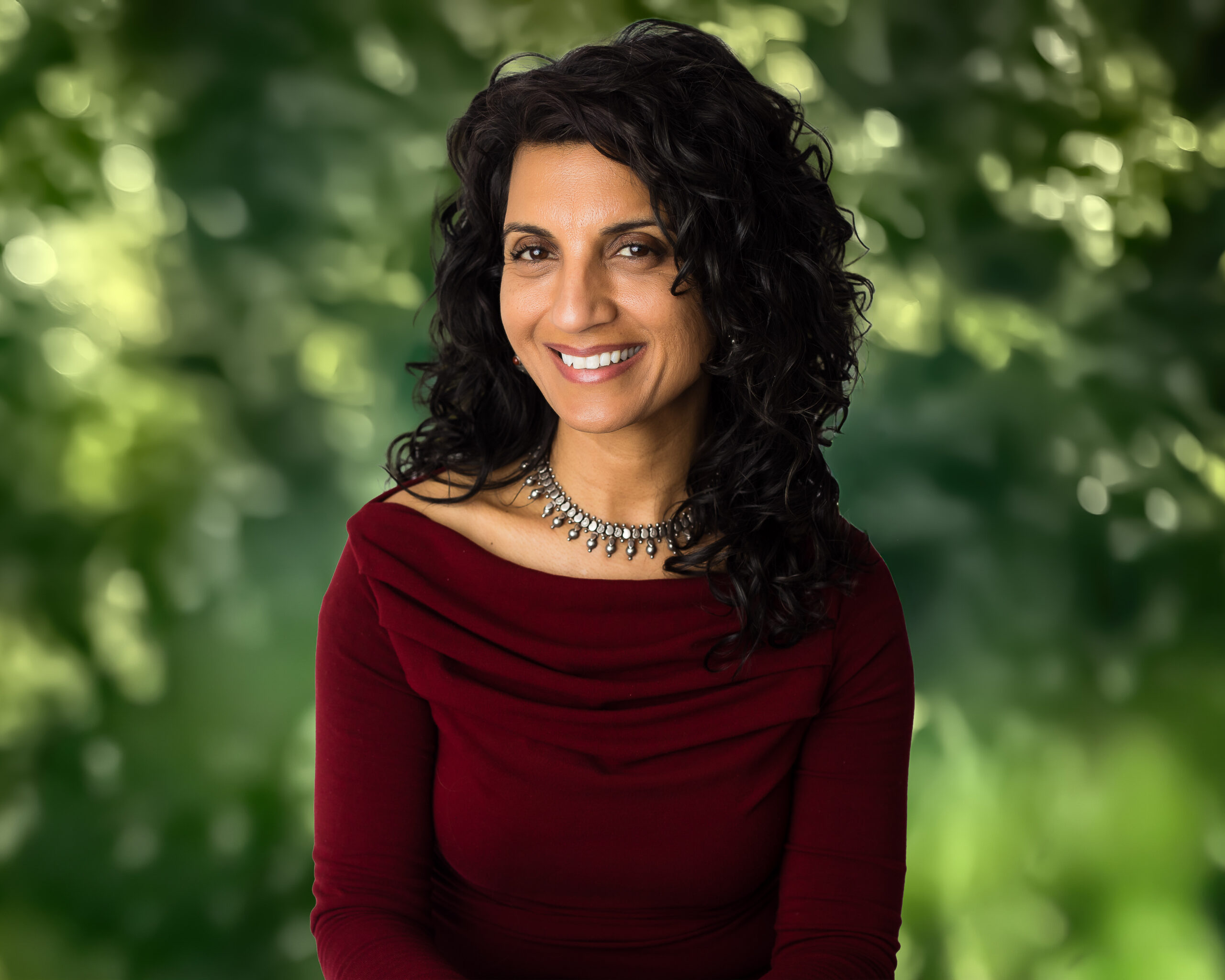
Geeta Maker-Clark, M.D. is a board-certified family physician and the Director of Integrative Nutrition and Advocacy at Endeavor Health. Trained in conventional medicine and deeply informed by community-based work, her career has focused on how food, culture, and social context shape health in ways the medical system often fails to address.
She co-directs the Culinary Medicine program at the University of Chicago, dances with Chicago’s Ayodele Drum & Dance company, and has helped build food justice programs on the South Side that encourage young people to think about food not simply as medicine, but as power. Her forthcoming book, Medicine for All People, calls for a healthcare system grounded in ancestral wisdom, cultural context, and a more expansive understanding of what healing requires.
I first met Dr. Maker-Clark while serving on a Food Tank panel in New York. Her perspective—rooted in clinical practice, policy awareness, and lived experience—offers a rare lens on the limits of one-size-fits-all nutrition advice. In this interview, we discuss food as medicine, the boundaries of traditional healthcare, and what it means to reclaim the kitchen as a central site of care.
Interview
Charles Platkin: You’re a physician whose work bridges clinical medicine, food justice, ancestral healing traditions, and community care—and you also dance with the acclaimed Chicago African dance company Ayodele Drum & Dance. Can you share your path into medicine, including how your cultural heritage, family traditions, and early experiences shaped the way you understand healing today? How did those influences sit alongside—or sometimes clash with—your formal medical training?
Geeta Maker-Clark, M.D.:
My medicine path has never been a straight line, it’s been layered, and deeply shaped by my culture, family, and community. I grew up immersed in Indian healing traditions through my family: food as medicine, spices as pharmacology, ceremonies to regulate my nervous system and to mark the seasonal changes. In my mom’s kitchen, health was never separated from care or our traditions. Though I didn’t know it then, those early experiences quietly taught me that medicine lives in daily practices, in movement, in how we feed and care for one another.
At the same time, my father is a surgeon and deeply steeped in the biomedical model of health care. He was my earliest mentor and guide into medicine. I was drawn to science too and became a physician through conventional biomedical training. Medical school gave me incredible tools, diagnostic skills, evidence-based thinking, quick decision making. I did a surgical obstetrics fellowship, where I was in the OR performing emergency c-sections almost daily, and learned to make life and death decisions very quickly. These were moments when ancestral knowledge, embodied practices, or spiritual frameworks were seen more as adjuncts or dismissed altogether. That tension was real. I often felt I was living between worlds: one that celebrated reductionism and efficiency, and another that honored complexity, story, and interdependence.
Much later, I found that dance became a place where those worlds could talk to each other. Dancing with Ayodele Drum & Dance, a Chicago based African dance company, has been profoundly formative for me. African and other ancient dance traditions understand the body as intelligent, communal, and inseparable from rhythm, history, and healing. Movement is medicine, it regulates stress, builds resilience, transmits memory, and restores joy. Dancing made it possible for me to feel that healing is embodied, that trauma lives in tissues and rhythms and can be released with movement, and that joy and connection are not luxuries but necessities for health.
Over time, I stopped trying to choose between these ways of knowing. Instead, my work has become integration, bridging clinical medicine with food justice, ancestral wisdom, and community care. I’ve seen how structural inequities, food apartheid, and cultural erasure shape disease far more powerfully than individual choices alone. Today, my understanding of healing is both rigorous and rooted. I recognize that the most powerful medicines are often collective, shared meals, shared movement, shared purpose, and that our task as physicians has never been just to treat disease, but to help restore the conditions in which people and communities can truly thrive.
Charles Platkin: Your book Medicine for All People will be published this summer. Why was this the moment to write it? What were you seeing—in the clinic, in communities, or in the healthcare system more broadly—that made you feel this book needed to exist now? Who did you most hope would read it when you began writing?
Geeta Maker-Clark, M.D.:
I wrote Medicine for All People because the moment we’re living through has made it unmistakably clear that our current healthcare system, while great in its capacity to treat acute injury and disease, is deeply limited when it comes to sustaining health, addressing trauma, and healing the roots of illness. Over the past decades in the clinic and in community work, I watched again and again how chronic stress, social inequity, disconnection from food and land, and collective histories of injustice showed up as inflammation, metabolic disease, poor mental health, fatigue and burnout. I saw that medicine in its conventional form too often treats symptoms without engaging the conditions that create them.
At the same time, I’ve seen the powerful, regenerative impact of the “medicines” that are all around us—ancestral foodways, communal rhythms, gratitude, breath and movement practices, connection to our ecosystems and nature, and deep belonging, to name a few. What this book is really about is inviting people to recognize those medicines and to understand health as something that’s as structural and social as it is biological. Medicine for All People reframes health as interdependent and shared—if none of us can be truly healthy unless we all are—and it calls for a transition from a culture of stress and sickness to one of healing and belonging. It is ultimately a book that calls us towards justice and love.
This felt like the right moment to write it because we’re living through what I would call both a health crisis and a consciousness crisis. On the one hand, rates of chronic disease continue to rise; on the other, people are waking up to how injustices embedded in our food systems, medical education, economic policies, and built environments shape wellbeing. That awakening, both among patients and within the medical community, was fertile ground for me to write a book that can critique what isn’t working, but more importantly can offer a path forward grounded in science, ancient wisdom, and collective agency. It is the work of our ancestors that I channeled here in this work.
When I began writing, I hoped first that clinicians would read it—not to abandon rigorous science, but to expand what counts as “medicine” in everyday lives. I hoped that community leaders, healers, activists, and anyone who’s ever felt underserved or unheard by the health system would find in it both affirmation and tools for healing. And I hoped that readers who’ve never thought of health through a justice lens might begin to see how deeply interconnected our bodies are with our communities, our histories, and our ecosystems. The book is ultimately a manifesto for a health revolution that’s inclusive, ancestral, relational, and rooted in the deepest parts of who we are.
Charles Platkin: You often speak about moving beyond one-size-fits-all models of nutrition and care. For readers accustomed to universal dietary standards, how do you explain the importance of culturally grounded, heritage-based approaches to food and healing? What do clinicians miss when they fail to account for history, culture, and context?
Geeta Maker-Clark, M.D.:
When I talk about moving beyond one-size-fits-all models of nutrition and care, I’m not arguing against science or population-level guidelines. I think those frameworks have value. What I’m saying is that they are incomplete on their own. Our bodies don’t exist in a vacuum and are not all the same. They’re shaped by ancestry, geography, culture, stress exposure, migration, and access. When we ignore those factors, we end up offering advice that may be technically “correct” but practically ineffective, harmful and perpetuate colonial practices.
Culturally grounded, heritage-based food traditions evolved over centuries as sophisticated, place-based health systems. They reflect local ecologies, climate, available crops, and collective knowledge about digestion, inflammation, and balance. When we ask people to abandon those traditions in favor of a narrow set of universal rules…“everyone should eat this and not that, this much at this time” we often disrupt metabolic resilience, cultural identity, and emotional wellbeing all at once. Food is not just fuel, it’s memory, belonging, and regulation of the nervous system.
I think what clinicians miss when they fail to account for history and culture is the root context of illness. Chronic disease doesn’t emerge solely from individual choices, it’s shaped by displacement, colonization, food apartheid, intergenerational trauma, and structural inequities. Two patients can eat the same diet on paper and have vastly different physiological responses because their bodies are carrying different histories of stress and scarcity. Ignoring that reality leads to what I call blame and shame-based medicine rather than care-based medicine. We put too much responsibility on the individual to hold their own health.
When clinicians take the time to understand a patient’s cultural foodways, family practices, and lived environment, nutrition counseling becomes more precise, not less. It becomes about restoring what has been disrupted, like connection to ancestral foods, rhythms of eating that align with physiology, and trust in one’s own body. That’s when care shifts from compliance to partnership, and from rigid prescription to sustainable healing. Ancient medical systems like Ayurveda and Traditional Chinese Medicine are based on this worldview of personalized care.
I do not think honoring culture and context is a departure from evidence-based medicine, I think it’s an expansion of it. It allows us to practice medicine that is accurate, socially responsive, and deeply humane.
Charles Platkin: You’ve spoken about growing up in a household where traditional Indian remedies from the kitchen were the first line of care—spices, herbs, and home preparations before pills. How did that upbringing influence your later medical education and your skepticism of a pill-first model of care? In Medicine for All People, do you explore the potential epigenetic impact of returning to ancestral foods—whether it’s possible that we are, in some ways, biologically primed to thrive on the foods of our specific lineages? How do you navigate that idea carefully, without veering into genetic determinism or oversimplification?
Geeta Maker-Clark, M.D.:
Growing up, the kitchen was our first pharmacy. Before anyone reached for a pill, there was turmeric warmed in milk, cumin and fennel for digestion, ginger for congestion. These weren’t framed as “alternative” remedies, they were simply care. When I entered medical training, I was fascinated by what modern medicine can do, especially in surgical emergencies and in the ICU. But I was also struck by how quickly we default to pills as the primary intervention, often without asking what conditions created the illness in the first place. My culture and work in global health in underresourced areas gave me a healthy skepticism of that reflex. Symptom suppression is not the same as healing, and much of the world and this country cannot afford pharma. That perspective helped me see pharmaceutical interventions as powerful tools, but not the only tools, and often not the first ones we should reach for. When after a few years into practice I was moving through prescription pads faster than they could be replaced, I knew I had to look more closely at what I was really practicing. I was never interested in being a drug dealer.
In Medicine for All People, I discuss how returning to ancestral foodways isn’t about romanticizing the past or suggesting that people must eat only within rigid cultural boundaries. It’s about recognizing that traditional diets often evolved alongside specific climates, labor patterns, and stressors—and that they tend to emphasize diversity, seasonality, bitter and fermented foods, and communal eating, all of which we know support metabolic and nervous system health across populations. I’m very intentional about avoiding genetic determinism. Our bodies are adaptive, not fixed. The invitation I offer readers is not to “eat your DNA,” but to listen more closely to the foods that feel regulating, sustaining, and culturally grounding—and to understand that those signals are shaped by both biology and lived experience.
Ultimately, the deeper point is this: healing is not one-size-fits-all, but it’s also not random. When we honor ancestral knowledge alongside modern science, we gain a more spacious, compassionate, and effective model of care, one that treats food not as a moral battleground or a biochemical equation alone, but as a living interface between history, biology, and belonging.
Charles Platkin: You’ve described a pivotal moment working with seventh graders when you asked what “medicine” meant to them and they answered: “pills, shots, diabetes.” That moment led you to rename your program Food Is Power. What changed when you made that shift? What have young people—particularly in communities shaped by disinvestment—taught you about agency, health, and the limits of traditional health education?
Geeta Maker-Clark, M.D.:
That moment with the students was both heartbreaking and clarifying. They told me that medicine was not something meant to signal care and possibility, but rather represented illness, fear, and anxiety. For many of these young people, medicine was about managing damage that had already been done. That realization made it clear that we needed to change not just the curriculum, but the whole paradigm.
Renaming the program Food Is Power was a deliberate shift in language and orientation. The word medicine had come to feel external, clinical, and reactive. Power, on the other hand, spoke to agency. Students in this class see themselves not as passive recipients of health advice, but as active participants in their own wellbeing. Food became a tool they could touch, cook, share, and question—not a list of rules handed down by experts. We learn together, share stories and make and eat food together. It is a shared wisdom.
What young people, especially those growing up in communities shaped by disinvestment, have taught me is that they already understand the limits of traditional health education. They know when advice ignores their reality. Telling a child to “eat fresh vegetables” without acknowledging food apartheid, family work schedules, cultural foodways, or neighborhood safety isn’t just ineffective, it erodes trust. Kids are incredibly perceptive. They can name injustice long before they’re given the vocabulary for it.
They’ve also taught me that power grows when education is relational. When we cook together, talk about family recipes, grow herbs, or trace how food connects to mood, focus, and energy, health stops feeling abstract. It becomes immediate and personal. Young people don’t need scare tactics or moralized nutrition messaging, actually no one does. We need frameworks that honor their intelligence and lived experience.
That shift reinforced something I return to again and again and write extensively about in my book: health education fails when it treats people as problems to be fixed rather than partners in care. Programs like Food Is Power work because they start from the truth that young people already hold wisdom about their bodies and communities. Our job is not to overwrite that wisdom, but to help it surface.
Charles Platkin: You’ve also spoken about working within hospital systems to improve food quality—engaging infectious disease teams around antibiotic resistance, running cost analyses to shift toward antibiotic-free meat, and introducing more plant-forward menus. What have you learned about what actually moves large institutions to change, and where resistance most often shows up? For hospitals or school systems that want to start but feel overwhelmed, what is the most realistic first step?
Geeta Maker-Clark, M.D.:
Working within hospital systems taught me very quickly that values alone don’t move institutions—alignment does. Most people inside hospitals care deeply about health, but large systems are constrained by cost structures, contracts, liability concerns, and inertia. What actually creates movement is translating values into the language institutions already speak: patient outcomes, risk reduction, cost savings, and operational feasibility.
For example, conversations about antibiotic resistance became far more actionable when we connected the dots between food procurement and infectious disease priorities. When infectious disease acknowledged that routine antibiotic use in industrial meat directly undermines the antibiotics they rely on to save lives, plant based diet stopped being a “nice-to-have” and became a clinical issue. Pairing that with cost analyses that showed that shifts toward antibiotic-free meat and more plant-forward menus could be cost-neutral or even cost-saving helped reframe food as a strategic intervention rather than an ideological one.
There’s also a persistent belief that healthier food will automatically cost more or be less acceptable to eat, even when data shows otherwise. And, importantly, food often falls into a gray zone of responsibility—owned by no single department! So that makes it easy to deprioritize.
For hospitals or school systems that want to begin but feel overwhelmed, the most realistic first step is to start with one lever you can measure. That might be switching a single protein source to antibiotic-free, introducing one plant-forward default meal per week, or piloting a menu change in one unit or school. Small, well-documented pilots build trust. They generate data. And they make the invisible visible, showing that better food can support health, reduce risk, and work within existing budgets. It is also usually very well received by administrators, which allows for more room to grow!
Charles Platkin: In your essay “The Medicines Are All Around Us,” you cite research showing that people with weaker social ties have a 50 percent increased risk of early mortality, and you describe loneliness as a disease in its own right. How does Medicine for All People translate the idea of community as medicine into something clinicians and patients can actually act on? What does it mean to prescribe connection in a system built around appointments and interventions?
Geeta Maker-Clark, M.D.:
When I wrote that piece, I was trying to name something many of us feel but rarely diagnose: that loneliness functions like a chronic disease. The research showing a roughly 50 percent increased risk of early mortality with weak social ties is striking, but what matters even more is how invisible that risk remains in clinical settings. We routinely screen for blood pressure and cholesterol, but rarely for isolation, grief, or disconnection, despite their profound physiological effects.
In Medicine for All People, I try to translate the idea of community as medicine into actions that clinicians and patients can realistically take, even within imperfect systems. Prescribing connection doesn’t mean adding another box to check or another burden to clinicians. It means expanding what we recognize as clinically relevant. Simple questions like: Who do you eat with? Who would you call if you were sick? When was the last time you felt a sense of belonging? can be really diagnostic. They tell us something essential about a patient’s inflammatory load, stress physiology, and capacity to heal.
For clinicians, prescribing connection often looks less like a formal referral and more like a shift in orientation. It might mean legitimizing group visits, cooking classes, walking groups, dance, faith communities, or mutual aid networks as real health interventions—not “extras.” It means partnering with community organizations. In many cases, the most effective “treatment” is really helping someone reconnect to a place where they are seen, needed, and valued.
I’m careful not to romanticize connection or suggest that people simply need to “try harder” to belong. Structural forces like work schedules, caregiving burdens, racism, disability, displacement, make isolation more likely for some than others. That’s why the book emphasizes small, repeatable practices: shared meals, regular movement with others, intergenerational care, showing up consistently in one place. These are not just gestures, they are biologically protective.
Prescribing connection in a system built around appointments and interventions ultimately requires a mindset shift. Medicine has been incredibly effective at extending life and now we must become just as skilled at supporting the conditions that make life livable. That, to me, is the deeper invitation of Medicine for All People: to treat connection not as a soft outcome, but as a core determinant of health, and to practice medicine accordingly.
Charles Platkin: In that same essay, you write about fireweed blooming after forest fires and about trees surviving winter through dormancy—letting go of leaves, slowing metabolism, and conserving energy—and you apply those metaphors to patients facing illness. How do you counsel patients, particularly those facing chronic illness or cancer, to embrace slowing down in a culture that glorifies “fighting” disease at all costs? What does healing look like when productivity is no longer the measure?
Geeta Maker-Clark, M.D.:
Our dominant cultural narrative frames illness as a battle to be fought, something to conquer through force, discipline, and relentless effort. For some people, that language is empowering. But for many, especially those living with chronic illness or cancer, it becomes another source of harm. It can make rest feel like failure. And vulnerability feel like giving up.
When I counsel patients, I start by affirming that slowing down is not giving up. In biology, slowing down is often how systems survive. Trees don’t resist winter; they adapt to it. They conserve energy, shed what they can’t maintain, and trust that life continues beneath the surface. Fireweed doesn’t bloom despite devastation, it blooms because the conditions have changed. These are not passive processes. They are very intelligent responses to stress.
For patients facing chronic illness or cancer, embracing slowing down often begins with permission…permission to listen to their bodies rather than override them, permission to grieve the loss of a former pace or identity, permission to redefine strength. I help patients distinguish between treatments that are truly life-preserving and cultural expectations that demand constant productivity, optimism, or heroism. Those expectations don’t heal bodies; they exhaust them. When productivity is no longer the measure, healing becomes about alignment. Are you living in a way that supports your body’s current capacity? Are you resourced emotionally and relationally? Are there moments of beauty, connection, or peace, even briefly? That’s not resignation. That’s wisdom.
So, what I try to offer patients is a reframing… you are not failing because your body needs to slow down. You are responding appropriately to what you are carrying. Just as ecosystems regenerate through cycles of growth and rest, human healing often requires letting go, conserving energy, and trusting that life can reorganize itself in ways we may not yet be able to see. Trust in that process.
Charles Platkin: Across your work with traditional healers and with community organizations such as Apna Ghar and Urban Growers Collective, what have you learned about food and cooking as tools for healing trauma? Where do clinicians and health systems most often misunderstand—or oversimplify—this kind of work?
Geeta Maker-Clark, M.D.:
What I’ve learned from working in communities is that food becomes healing not because it’s “healthy,” but because it restores choice, rhythm, and dignity. Trauma often strips people of agency over their bodies and their environments. Cooking—deciding what to make, touching ingredients, working with heat and timing, sharing a meal—can gently return a sense of control and safety. Familiar smells and flavors can reconnect people to memory, ancestry, and identity in ways that bypass language. In that sense, food works on the nervous system as much as it works on metabolism.
Where clinicians and health systems most often misunderstand this work is by oversimplifying it into either nutrition advice or wellness programming, which can be a very colonized mindset. Food-as-healing is not about telling people what to eat, and it’s not a substitute for therapy or medical care. It’s a pathway that supports regulation, trust, and resilience. Another common misstep is placing the burden of healing on communities without resourcing them. Community cooking and food programs are sometimes celebrated in the media and on paper while being chronically underfunded or treated as “soft” interventions. In reality, this work requires skilled facilitation, cultural humility, trauma awareness, and long-term investment. It is not casual or free labor, it is sophisticated care. This is one of the great challenges of culinary medicine education.
Charles Platkin: For someone who feels overwhelmed and can only change one thing about how they eat or live, what is the single most powerful starting point you’ve seen make a real difference? Zooming out, what do you think the media and the public most misunderstand about food, healing, and justice—and what do you hope stays with readers after they finish Medicine for All People?
Geeta Maker-Clark, M.D.:
When someone feels overwhelmed, the most powerful place to start is creating one small, reliable moment of pause each day, a moment where nothing is being optimized, tracked, or improved. It might be stepping outside for five minutes, placing a hand on the chest and taking a few slow breaths, or moving the body gently in a way that feels familiar and grounding. I’ve seen that single practice, one daily interruption of urgency, begin to restore sleep, emotional resilience, and a sense of agency more consistently than almost any sweeping lifestyle change.
Overwhelm isn’t a personal failure—it’s a physiological state. When the nervous system is in constant alert, the body can’t repair, adapt, or heal. Starting with regulation creates the conditions for everything else to follow. From that place, people often begin to make changes not because they’re “supposed to,” but because they feel resourced enough to do so.
Zooming out, what I think the media and the public most misunderstand about healing and justice is the belief that health is primarily about individual effort. We focus on personal discipline while overlooking the roles of chronic stress, isolation, economic precarity, racism, and environmental instability. This framing not only misses the root causes of illness, it places undue blame on individuals for conditions shaped by systems far larger than they are. I do pause when I see the amount of content focused on cures, protocols, fixes, and formulas. It can feel like we are feeding into the capitalist model of consumption and production rather than nourishing our deepest needs for health, connection, love and justice.
Another misunderstanding is the idea that slowing down is indulgent or unscientific. In reality, restoration is a biological necessity. The body heals in states of safety, not in constant striving. Justice-oriented approaches to health aren’t soft, they are grounded in robust evidence about stress physiology, immune function, and social connection. The research is there if you need it, before you pause!
What I hope stays with readers after they finish Medicine for All People is a sense of relief and reorientation. Relief from the pressure to fix everything at once. And a reorientation toward healing as something that unfolds through safety, connection, and care—rather than relentless effort. If readers come away understanding that healing is not about doing more, but about being supported differently, by their communities, their environments, and the systems around them, filling their medicine pouch with beautiful free ancestral medicines they can use right away, then the book has done what I hoped it would do.
Fact Sheet: Lightning Round
Where did you grow up? Chicago, city and surrounds
The place you currently call home? Evanston, IL
Your current job title? Director of Integrative Nutrition and Advocacy; Co-Director, Culinary Medicine; Clinical Assistant Professor, University of Chicago, Pritzker School of Medicine
As a child, you wanted to be a…? Well, in truth, a gas station window washer or Dallas Cowboy cheerleader—both seemed really fun to me.
One word you’d use to describe our current food system? Fragile
Who is your foodie hero? Vandana Shiva, for defending seed sovereignty and ecological wisdom
What did you have for breakfast this morning? Vanilla cinnamon chia pudding with blueberries
Your favorite everyday food? Toasted good bread with good butter
Your last meal on Earth? No rushing, lots of conversation, a shared long table with something slow-cooked, lots of beautiful vegetables, chocolate, with people I love
Most overrated “health food”? I find celery juice pretty unpalatable
One healing ingredient you return to again and again? Holy Basil/Tulsi. She is a great protector of the nervous system for me.
Where can readers learn more about your work and follow what you’re doing next? @foodplantsdancedoc on IG, www.drgeetamakerclark.com