I take protein and amino acid supplements, but I honestly don’t know if they do anything.
-Rich Froning Jr., professional CrossFit athlete
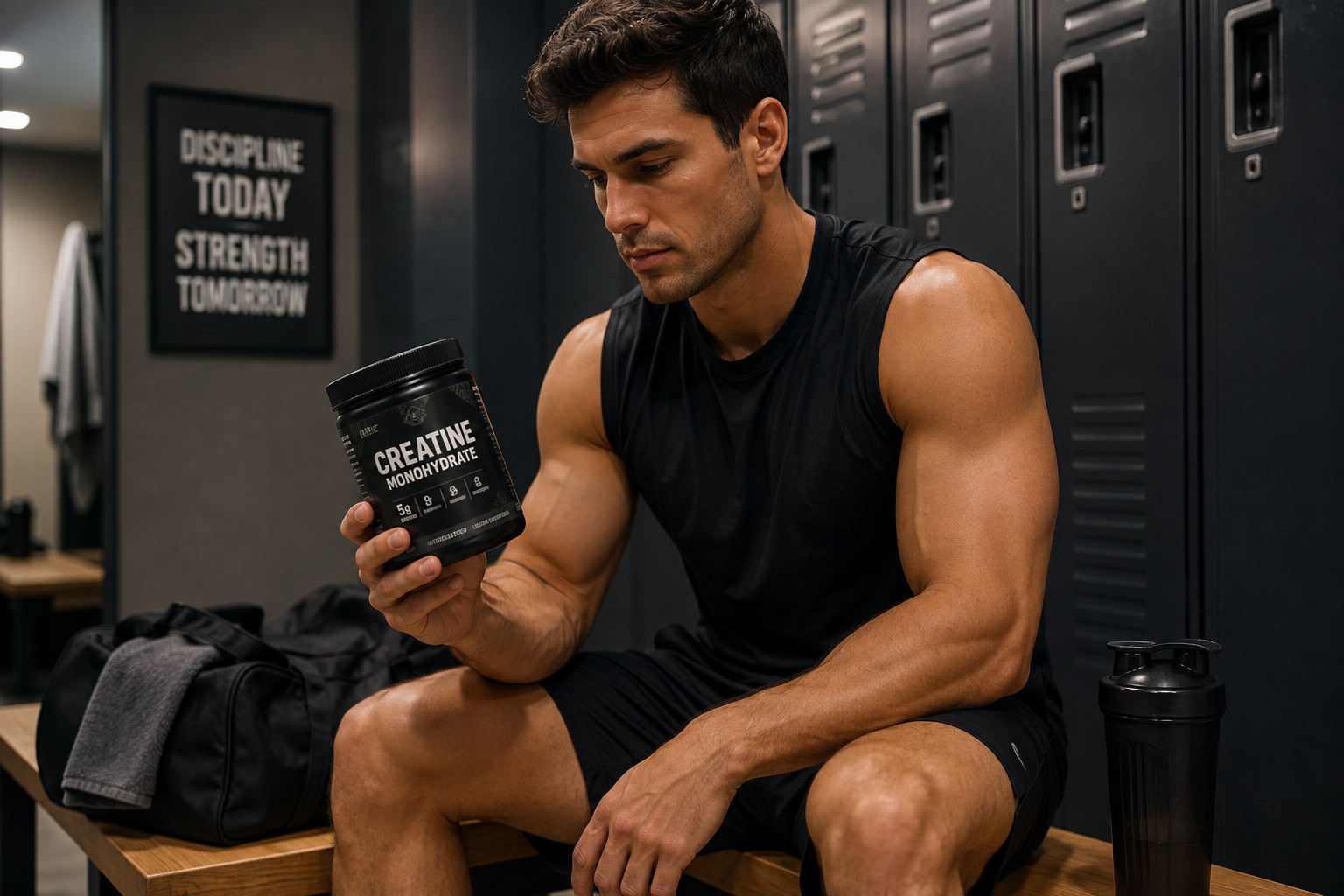
Creatine supplement sales have been rising quickly in the U.S. and beyond. In the U.S. alone, 2025 sales were $450 million, a year-on-year rise of 36%. The growth has moved beyond body building, into wellness and cognitive health (Mastrocola, 2026).
Let’s examine the benefits, risks, costs and the alternative sources of the supplement.
What is creatine?
Creatine is a naturally occurring, amino‑acid–derived compound that the body makes and also obtains from animal foods and supplements. Its main job is to back up and shuttle cellular energy through the creatine kinase–phosphocreatine system, which sustains cellular ATP levels during high-intensity activity, especially in tissues that need rapid bursts of ATP such as muscle, brain, and heart, thereby influencing physical performance, brain function, and overall metabolic health.
How does a lack of creatine affect health?
A lack of creatine, whether from low intake or impaired body synthesis, disrupts energy metabolism and is linked to muscle weakness and atrophy, cognitive and mood problems (including depression), and higher risks of heart and liver problems, fatigue, and poorer quality of life. Severe shortages of creatine cause profound neurodevelopmental disease, but even milder insufficiency is associated with worse muscle, brain, and cardiometabolic health.
How much creatine do humans need?
Current evidence suggests that humans need roughly 2 g per day of total creatine (slightly less for women), and because 73 percent of daily creatine needs are satisfied through synthesis (that is, created via our normal bodily functions), most people are likely to meet their requirements through regular consumption of meat, fish, and dairy products. Research indicates that an adequate ingested (from pre-cooked sources) intake for creatine is approximately 0.4g per day for a 75kg/165lb man, and approximately 0.24g per day for a 60kg/130lb woman. However, vegetarians, vegans, older adults, and those with limited access to animal-source foods may be at risk (for creatine insufficiency), and should consider supplementation at the above levels.
Where do you get creatine naturally?
Recent population studies treat 1 g per day from diet as a practical target, despite it taking total levels for healthy people above the 2g daily requirement.
In the human diet natural creatine comes almost entirely from animal muscle foods, especially red meat, poultry, and fish, with minor contributions from dairy and none from plants. Typical omnivores get 1 g per day from these foods, but people who avoid or greatly limit animal products get little or none from natural dietary sources and must produce it internally and/or rely on supplements.
Fish has the highest available quantity of creatine per ounce, roughly double that of either beef or pork. And cooking tends to reduce the available creatine by 20- 80%.
How much creatine will I ingest in a portion of meat or fish?
Meat contains about 5g of creatine per kg (2.2pounds). Fish contains around 10g per kg. When meats are cooked, the content can be reduced by up to 80%, depending on the amount and heat intensity of cooking (less and lower reduces the loss) and loss from juices. Fish loses less than a quarter of its creatine when cooked.
Importantly, drying meats (for example, jerky and salami) reduces creatine levels to near zero.
Therefore, 200g (7oz) of raw meat, or 100g (3.5oz) of raw fish has all the creatine required for a 1g serve. As the meat or fish is cooked, and as the temperatures and liquid loss increases, the quantity required to reach that level of intake increases.
For home use, it would be advisable to cook your meat or fish at a low temperature for as short a time as possible and to capture as much of the juices as possible. If you apply these principles, you can rely on a 5-10 percent loss of creatine for fish, and 10-40 percent for meats. When you eat out, you should assume a 25 percent for cooked fish, and 80 percent for fully cooked meat.
Creatine, strength and body builders.
“Just say rise and grind and hustle for the muscle” – A. J. Odudu, British television host
The additional creatine required for muscle growth or rehabilitation is minimal compared with maintenance needs. And individual variations in bone mass and muscle fiber morphology influence the effects of supplementation.
However, studies find that there is an advantage to strength and endurance training with increased creatine levels of 3-5g daily (body/weight scaled, remembering that healthy bodies synthesize more than 1 gram daily internally). There is no evidence that higher doses have any increased benefit.
Can I have too much creatine?
Hundreds of studies involving thousands of users have examined the long-term use (some for as long as 5 years) of up to 30g daily of creatine supplements. And, with the exception of those with less than normal kidney health, no adverse effects have been detected. Consult your doctor if you intend to ingest more than 5g of creatine daily, beyond a short term.
How are creatine supplements made?
Supplements are produced by synthesizing creatine monohydrate from precursors in water, followed by crystallization and purification. The raw creatine is then formulated into various solid or liquid dosage forms using technologies including extrusion, solid dispersions, effervescent salts, and microencapsulation to enhance solubility, stability, and convenience. New biotechnological routes using engineered microbes are under development as more sustainable production options but are not yet widely available. Chemically identical, they are a greener method of production.
Are all creatine supplements the same?
Creatine monohydrate remains the most reliable formulation for supplementation. Other salts have been tested but have shown no advantage, and they are more likely to be contaminated. Purity is a concern with all supplements.
What is the healthiest dietary source of creatine?
For those with access, fresh raw, oily fish (such as salmon, tuna, sardines, herring) requires the lowest volume, with the greatest side benefit of Omega 3 fatty acids.
At the time of this writing, there has been no direct study of the creatine levels in canned fish. Cured or cooked herring shows a loss of just 25 percent of available creatine, which indicates that processed fish is a healthy source of creatine for those with difficulties accessing fresh meat and fish, with the added benefit of Omega 3 fatty acids.
How do I work out how much creatine I need?
“I don’t have to do much to have muscles. It’s just genetic.” -Grace Jones
Creatine is something that most people, with most diets get plenty of. The more animal protein in your diet, the more likely you are to have all the creatine you need.
The surest way to measure your creatine intake is to keep a week-long food diary. Using the information in this article, or with the help of the references below, you can work out your current level of creatine intake.
If you’re a normal person with a healthy fitness routine, 2g daily is comfortably adequate. If you have high level fitness and strength goals and activities, it is safe to raise that to 5g. Be mindful that meat consumption has its own risks.
Creatine supplements from creatine monohydrate are a safe form of supplementation, except for those with pre-existing kidney health issues. There appears to be no risk or reward from creatine intake of over 5g daily.
Sources, in order of appearance
Mastrocola, T. (2026). Creatine as a Commercial Wedge: A Data-Anchored Innovation Opportunity Map. https://www.linkedin.com/pulse/creatine-commercial-wedge-data-anchored-innovation-map-mastrocola-tovge
Braissant, O., Henry, H., Béard, E., & Uldry, J. (2011). Creatine deficiency syndromes and the importance of creatine synthesis in the brain. Amino Acids, 40, 1315-1324. https://doi.org/10.1007/s00726-011-0852-z.
Roschel, H., Gualano, B., Ostojic, S., & Rawson, E. (2021). Creatine Supplementation and Brain Health. Nutrients, 13. https://doi.org/10.3390/nu13020586.
Wydra-Rojek, A., Łakoma, A., Marzec, W., Choiński, M., Wasiewicz-Ciach, P., Kuczyński, P., Marszałek, A., Marzec, M., Kutyła, K., & Mokot, W. (2024). Creatine – the impact of supplementation on the human body. Quality in Sport. https://doi.org/10.12775/qs.2024.20.54004.
Ostojic, S. (2025). The evolving role of creatine in public health: from food-based nutrient to supplement and beyond. Public Health Nutrition, 28. https://doi.org/10.1017/s1368980025101390.
Dobenecker, B., & Braun, U. (2015). Creatine and creatinine contents in different diet types for dogs – effects of source and processing.. Journal of animal physiology and animal nutrition, 99 6, 1017-24 . https://doi.org/10.1111/jpn.12383.
Ostojić, S. (2020). Eat less meat: Fortifying food with creatine to tackle climate change.. Clinical nutrition. https://doi.org/10.1016/j.clnu.2020.05.030.
Ostojić, S., & Forbes, S. (2021). Perspective: Creatine, a Conditionally Essential Nutrient: Building the Case.. Advances in nutrition. https://doi.org/10.1093/advances/nmab111.
Ostojic, S. (2026). Establishing Dietary Reference Intakes for Creatine in Adults.. Nutrition reviews. https://doi.org/10.1093/nutrit/nuag009.
Wang, Z., Qiu, B., Li, R., Han, Y., Petersen, C., Liu, S., Zhang, Y., Liu, C., Candow, D., & Del Coso, J. (2024). Effects of Creatine Supplementation and Resistance Training on Muscle Strength Gains in Adults <50 Years of Age: A Systematic Review and Meta-Analysis. Nutrients, 16. https://doi.org/10.3390/nu16213665.
Iraki, J., Fitschen, P., Espinar, S., & Helms, E. (2019). Nutrition Recommendations for Bodybuilders in the Off-Season: A Narrative Review. Sports, 7. https://doi.org/10.3390/sports7070154.
Forbes, S., Candow, D., Ostojić, S., Roberts, M., & Chilibeck, P. (2021). Meta-Analysis Examining the Importance of Creatine Ingestion Strategies on Lean Tissue Mass and Strength in Older Adults. Nutrients, 13. https://doi.org/10.3390/nu13061912.
Candow, D., Ostojic, S., Forbes, S., & Antonio, J. (2024). Does one dose of creatine supplementation fit all?. Advanced Exercise and Health Science. https://doi.org/10.1016/j.aehs.2024.05.002.
Kreider, R., Jäger, R., & Purpura, M. (2022). Bioavailability, Efficacy, Safety, and Regulatory Status of Creatine and Related Compounds: A Critical Review. Nutrients, 14. https://doi.org/10.3390/nu14051035.
Longobardi, I., Solis, M., Roschel, H., & Gualano, B. (2025). A short review of the most common safety concerns regarding creatine ingestion. Frontiers in Nutrition, 12. https://doi.org/10.3389/fnut.2025.1682746.
Dobenecker, B., & Braun, U. (2015). Creatine and creatinine contents in different diet types for dogs – effects of source and processing.. Journal of animal physiology and animal nutrition, 99 6, 1017-24 . https://doi.org/10.1111/jpn.12383.
Sheng, Y., Wu, Y., Zhang, L., Lv, X., Li, J., Liu, L., Du, G., Chen, J., & Liu, Y. (2025). Reconstitution of Methionine Cycle With ATP Regeneration for Whole‐Cell Catalysis of Creatine Production in Engineered Escherichia coli. Microbial Biotechnology, 18. https://doi.org/10.1111/1751-7915.70145.
Hughes, R. (1960). Chemical studies on the herring (Clupea harengus). IV.—Creatine in herring flesh, and its behaviour during heat processing. Journal of the Science of Food and Agriculture, 11, 700-705. https://doi.org/10.1002/jsfa.2740111204.
Kreider, R., Jäger, R., & Purpura, M. (2022). Bioavailability, Efficacy, Safety, and Regulatory Status of Creatine and Related Compounds: A Critical Review. Nutrients, 14. https://doi.org/10.3390/nu14051035.
Larsen, R., Stormo, S., Dragnes, B., & Elvevoll, E. (2007). Losses of taurine, creatine, glycine and alanine from cod (Gadus morhua L.) fillet during processing. Journal of Food Composition and Analysis, 20, 396-402. https://doi.org/10.1016/j.jfca.2006.10.001.
Purchas, R., Rutherfurd, S., Pearce, P., Vather, R., & Wilkinson, B. (2004). Concentrations in beef and lamb of taurine, carnosine, coenzyme Q(10), and creatine.. Meat science, 66 3, 629-37 . https://doi.org/10.1016/s0309-1740(03)00181-5.
Almeida, D., Pereira, R., Borges, E., Rawson, E., Rocha, L., & Machado, M. (2022). Creatine Supplementation Improves Physical Performance, Without Negative Effects on Health Markers, in Young Weightlifters. Journal of Science in Sport and Exercise, 4, 255 – 265. https://doi.org/10.1007/s42978-021-00147-9.
Wuertz, S., & Reiser, S. (2022). Creatine: A valuable supplement in aquafeeds?. Reviews in Aquaculture. https://doi.org/10.1111/raq.12717.
Protealpes (2025) Does fish contain creatine? https://protealpes.com/en/creatine/poissons/?srsltid=AfmBOope5-QURQpCHgEV_OQan7VdoVtmx14lgkgl9I26KEeNs27cQBWb